

 English
 中文简体
 Français
1/2 Equals How Many Ounces? Cups, Pounds, and Bottle Fill Sizes Explained
Content
Half of what, exactly? That is the first question worth asking, because "1/2 equals how many ounces" has more than one honest answer. Half a cup is 4 fluid ounces. Half a pound is 8 ounces. Half a tablespoon is a quarter of a fluid ounce. The number changes because the thing being halved changes.
In our daily work making cosmetic bottles, this question comes up constantly — in a formulator's lab, on a filling line, or in an email from a brand owner asking whether a 50 ml bottle really holds "about 1.7 oz." So let's work through the conversions properly, with the reasoning behind each one, and then look at where they actually matter.
The Short Answers Most People Are Looking For
Nearly every version of this question comes from one of three places: a recipe written in cups, a package weighed in pounds, or a bottle label printed in milliliters. These conversions cover the vast majority of real situations:
- 1/2 cup = 4 fluid ounces — the most common reading, and the one most cooking references give.
- 1/2 pound = 8 ounces — weight, not volume. Half a pound of anything reads 8 oz on a scale.
- 1/2 tablespoon = 1/4 fluid ounce — handy for small fragrance or serum doses.
- 1/2 pint = 8 fluid ounces, because a US pint is 16 fl oz.
- 1/2 quart = 16 fluid ounces and 1/2 gallon = 64 fluid ounces.
- 1/2 liter ≈ 16.9 fluid ounces — the metric case, and the one that matters most in packaging.
The pattern is friendlier than it looks. Cups, pints, quarts and gallons all convert by multiplying by 8, 16, 32 or 128. Pounds convert by multiplying by 16. Only the metric side needs genuine arithmetic, because one US fluid ounce equals 29.5735 milliliters.
Quick Conversion Table
Here is the same information laid out for fast reference. The right-hand column matters as much as the middle one.
| Half of… | Equals | Type of ounce |
|---|---|---|
| 1/2 cup | 4 fl oz | Volume |
| 1/2 pint | 8 fl oz | Volume |
| 1/2 quart | 16 fl oz | Volume |
| 1/2 gallon | 64 fl oz | Volume |
| 1/2 liter | 16.9 fl oz | Volume |
| 1/2 tablespoon | 0.25 fl oz | Volume |
| 1/2 teaspoon | 0.08 fl oz | Volume |
| 1/2 pound | 8 oz | Weight |
| 1/2 kilogram | 17.6 oz | Weight |
Why a Fluid Ounce and an Ounce Are Not the Same Thing
A fluid ounce measures space; an ounce measures mass. They happen to line up almost perfectly for water — one fluid ounce of water weighs very close to one ounce — and that coincidence is exactly why the confusion survives for so long.
The two diverge the moment density changes. A fluid ounce of a light cosmetic oil weighs roughly 0.92 oz, while a fluid ounce of glycerin weighs about 1.26 oz. Same volume, very different scale reading. This is why packaging is almost always labeled by volume: a 50 ml bottle is a 50 ml bottle no matter what goes inside it. The net weight printed on the carton is a separate figure, calculated from the density of the formula that fills it.
So when someone asks how many ounces are in half a cup of lotion, the volume answer (4 fl oz) is fixed, but the weight answer depends entirely on the lotion.
Converting by Hand, Without an App
Once you know the multipliers, the arithmetic becomes something you can do in your head while standing at a filling station:
- From cups to fluid ounces: multiply by 8.
- From pints: multiply by 16.
- From quarts: multiply by 32.
- From gallons: multiply by 128.
- From pounds to weight ounces: multiply by 16.
- From milliliters to fluid ounces: divide by 29.5735.
A worked example makes it concrete. A 30 ml serum bottle is 30 ÷ 29.5735 ≈ 1.01 fluid ounces, which is precisely why 30 ml has become the industry's stand-in for the 1 oz size. Likewise, 15 ml works out to 0.51 fl oz — just over half an ounce.
Where Half-Ounces Actually Matter in Cosmetic Packaging
Small volumes are where this arithmetic earns its keep. A 15 ml bottle holds just over half a fluid ounce, so a brand asking for "around half an ounce" of travel-size product usually lands there. From that point the numbers stay conveniently close to round figures: 50 ml ≈ 1.7 fl oz, 100 ml ≈ 3.4 fl oz, 200 ml ≈ 6.8 fl oz. Our own round cleansing bottle range runs from 10 ml sample sizes up to 1000 ml, and every one of those capacities is a volume figure first and an ounce figure second.
 Oval White 15ml PE Sunscreen Bottle for SamplingA compact 15ml oval bottle suits sunscreen sampling and travel use, pairing PE with multi-layer EVOH in a wholesale format.View Product →
Where the half-ounce question becomes genuinely practical is in sampling. A 15 ml sunscreen or serum bottle gives a customer roughly two to three full-face applications — enough to judge texture and finish, not enough to be wasteful. That is a volume decision, not a weight decision, and it is made long before anyone prints "0.5 fl oz" on the carton.
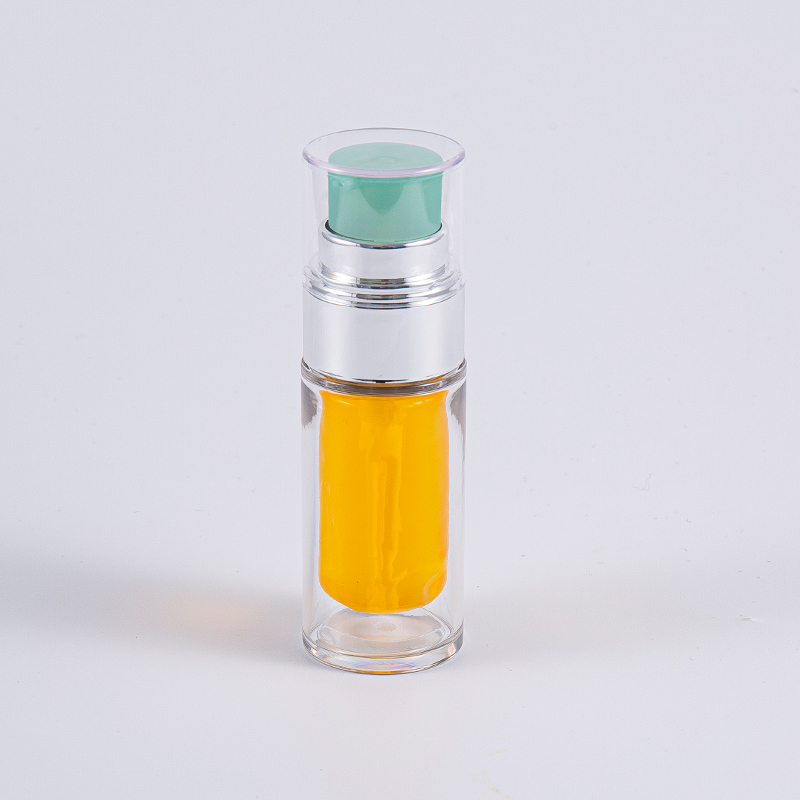 Clear PETG Vacuum Bottle with Multi-Layer Inner BagA 30ml or 50ml airless pump bottle uses a clear PETG body and composite inner bag to protect oxygen-sensitive skincare formulas.View Product →
For airless formats, the same logic applies with one extra consideration: the inner bag collapses as product is dispensed, so the declared capacity refers to the bag's usable volume rather than the bottle's outer cavity. A 30 ml airless pack and a 30 ml standard pack both hold about 1 fl oz of formula, but they look and behave quite differently on a shelf.
Mistakes That Trip People Up
A few recurring errors are worth flagging, because they cause real problems downstream:
- Mixing US and UK fluid ounces. An imperial fluid ounce is 28.413 ml, roughly 4 percent smaller than the US one. Four UK fluid ounces is about 113.7 ml, not 118.3 ml — a difference that matters on a fill line.
- Using a dry cup for liquids, or the reverse. A cup of flour does not weigh 8 oz; it is closer to 4.25 oz depending on how it was scooped. Volume measures are only reliable when the ingredient and the method match.
- Reading "oz" on a cosmetic carton as volume. Net weight is a mass figure derived from density. The bottle's ml marking is the volume figure.
- Rounding too early. Calling 30 ml "1 oz" is fine on a consumer label, but it is not fine when you are calculating cost per unit or how many kilos of formula a batch actually needs.
If you regularly decant or refill, it helps to keep a small graduated cylinder on hand rather than trusting the markings on a decorative bottle — our note on refilling lotion into small bottles covers the practical side of that routine.
Matching a Bottle to the Number on the Label
Capacity on a cosmetic bottle almost always means nominal fill volume — the amount the bottle is designed to hold once headspace is left for the pump, the closure and a little thermal expansion. A 50 ml bottle does not hold exactly 50 ml to the brim, and it shouldn't.
Thick-wall designs make this distinction visible in a useful way. The outer wall can look generous and premium while the inner cavity holds exactly the declared volume, which is why a thick-wall 50 ml bottle reads as a more substantial product than a thin-wall bottle of identical capacity. If a label says 1.7 fl oz, the fill line is what matters — not the outer silhouette.
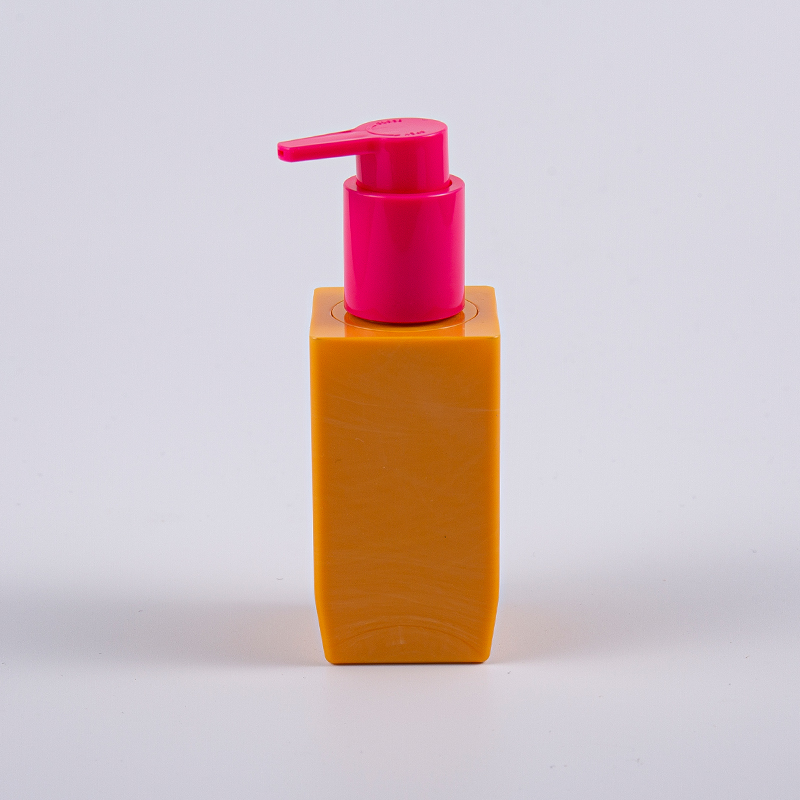 Square 50ml PETG Thick-Wall Lotion Bottle with PumpA 50ml square thick-wall PETG lotion bottle with plastic pump, suited to skincare and cosmetic formulas where declared fill volume matters.View Product →
Our rule of thumb when quoting is simple: confirm the target volume in milliliters, confirm the fill level the customer expects, and only then discuss how it will be described in ounces on the artwork.
If you take one thing away from all of this, let it be the pair of numbers that cover most everyday cases: half a cup is 4 fluid ounces, and half a pound is 8 ounces. Everything else is a multiplier away. The one habit worth building is asking "volume or weight?" before doing any conversion at all — it saves a surprising number of arguments in a lab or on a production floor.
And if you are trying to work out whether a particular bottle size fits your formula, your fill equipment and your shelf presence all at once, that is the sort of conversation we genuinely enjoy. Bring the milliliter figure, and we will help you find the shape that suits it.
PREV:No previous articleNEXT:How to Wrap Shampoo Bottles: Practical Gift and Retail Packaging Tips for Brands
Interested in cooperation or have questions?
Subscribe to us and
get the latest updates.
Stay In Touch

Product Links
Contact Us
-
Phone: +86-13567569350
-
Tel: +86-575-82575298
-
Email: [email protected]
-
Add: No. 5 Plant, Zhejiang Tengxin New Energy Industrial Park, Daoxu Street, Shangyu District, Shaoxing City, Zhejiang Province, China.
-
South Korean company: 태미코스
Tel: 010-5617-6888
Add: 서울특별시 금천구 가산동 60-46 더리즌밸리 801호
Copyright © Shaoxing Lizhi Plastic Products Co., Ltd.