


 English
 中文简体
 Français
How to Reuse Dropper Bottles: Cleaning, Safety, and Practical Ideas for Home and Travel
Content
- 1 First, Identify the Bottle and Its Components
- 2 Clean and Sanitize Every Part
- 3 Inspect Before You Refill
- 4 Practical Ways to Reuse Dropper Bottles
- 5 What Not to Reuse Dropper Bottles For
- 6 How to Choose Dropper Bottles Worth Reusing
- 7 Build a Simple Reuse Kit
- 8 When to Retire and Recycle
- 9 A Final Word on Reusing Dropper Bottles
Dropper bottles are small, precise, and genuinely useful. They let you control how much oil, serum, toner, or tincture you dispense, and they are easy to keep on a shelf or slip into a travel bag. That is why so many people hesitate to throw them away after the last drop is gone.
Reusing a dropper bottle is not simply a matter of rinsing it out. The material, the dropper assembly, the product that was inside, and the condition of the bottle all matter. A little care at the start makes the second life safer and far more useful.
First, Identify the Bottle and Its Components
Before you refill anything, look at the bottle closely. Is it glass or plastic? Is the dropper made of glass with a silicone bulb, or is the whole top plastic? Check the label and any recycling mark. A bottle that held a cosmetic oil is usually a better candidate for reuse than one that held an unknown medicine, essential oil blend, or household chemical.
| Bottle Material | Reuse Outlook | Key Precaution |
|---|---|---|
| Glass | Excellent for oils, serums, and home fragrance blends | Check for chips and cracks; boil only if the maker says it is heat-safe |
| PET or PETG plastic | Good for short-term refills and dry or oil-based formulas | Avoid hot water and long contact with strong essential oils |
| PP or PE cap and collar | Reusable if the threads and seal are intact | Replace if cracked; silicone bulbs can absorb odors |
| Silicone dropper bulb | Sometimes reusable after washing | Retire if sticky, torn, stretched, or slow to recover its shape |
If the bottle was used for a strong essential oil, a fragrance oil, or a product with a lingering scent, treat it as a separate bottle for similar uses. Scent can stay in plastic longer than you expect, and it may transfer into the next product.
Clean and Sanitize Every Part
Cleaning is the step that decides whether reuse is worthwhile. Rushing it can leave an oily film, a lingering smell, or bacteria in the bottle. Work through the parts one at a time and give them time to dry.
- Empty and rinse the bottle as soon as you finish the product. Dried oil or serum is much harder to remove than fresh residue.
- Take apart only what comes apart easily. Most dropper caps are not designed to be fully dismantled, so do not force the pipette out of the cap.
- Wash all parts in warm water with a mild, unscented dish soap. Use a soft bottle brush for the inside of the bottle and a gentle rinse for the pipette. Avoid abrasive pads.
- Rinse until the water runs clear and no scent remains. For oily formulas, repeat the wash once or twice before you sanitize.
- Sanitize glass with boiling water only if the bottle is tempered and heat-safe; otherwise use 70% isopropyl alcohol. For plastic, stick to alcohol and air drying. Do not pour boiling water into PET or PETG bottles.
- Dry completely upside down on a clean rack. Moisture left inside can spoil the next formula or encourage mold in a closed bottle.
Skip bleach for cosmetic reuse unless you can rinse it thoroughly and verify the material is compatible. Isopropyl alcohol is usually the more practical sanitizer for small dropper bottles, and it evaporates cleanly.
Inspect Before You Refill
Hold the bottle up to the light. Look for cracks, chips, cloudy patches, deep scratches, or a dropper tip that is blunt or broken. Check that the cap still seals and that the pipette is not loose in the collar. A damaged dropper can leak, and a cracked bottle can cut you or fail during travel.
Smell the inside after cleaning. If a strong odor remains, do not use the bottle for a delicate face oil or a lightly scented product. Keep it for a matching fragrance blend, or retire it. A bottle that no longer closes properly is not worth saving.
Practical Ways to Reuse Dropper Bottles
Beauty and Personal Care
- Make small batches of facial oil with jojoba, rosehip, squalane, or a simple carrier-oil blend. Label it with the date and keep it away from heat.
- Decant body oil, cuticle oil, or hair serum from a larger pump bottle so you can apply it precisely without wasting product.
- Refill a clean bottle with toner or essence for a short trip. Use it within a few days rather than storing a water-based product long term.
- Keep a separate bottle for a homemade lip oil or beard oil. Anhydrous oil blends are easier to store safely than homemade water-based formulas.
Travel and Everyday Carry
- Build a three-bottle travel kit for face oil, body oil, and cuticle care. Label each bottle clearly and place it in a leak-proof bag.
- Refill from your full-size product just before you leave. Clean the small bottle first, and do not top off an old bottle with fresh product.
- Use colored caps or simple labels to tell similar oils apart at a glance.
Home, Craft, and Hobby
- Glass dropper bottles work well for small diffuser blends or fragrance samples. Keep them upright and away from direct sunlight.
- Use a dedicated bottle for precision oil in a sewing kit, workshop, or hobby box. Label it clearly and keep it away from cosmetics.
- Herbal tinctures should go only into clean, food-grade glass. Do not use an unknown plastic dropper bottle for anything you plan to consume.
What Not to Reuse Dropper Bottles For
- Pesticides, laboratory chemicals, or any unknown substance.
- Food or medicine unless the bottle is known to be food-grade and thoroughly sanitized.
- Strong solvents, bleach, hydrogen peroxide, or acidic cleaners.
- Essential oils in plastic bottles that were not designed for them.
- Homemade water-based toners or serums without a preservative.
- Cracked, chipped, cloudy, or badly scratched bottles.
- Anything you plan to heat in a microwave.
Keep cosmetic bottles and household bottles separate. A neat label and a dedicated storage spot prevent the kind of mix-up that turns a clever reuse into a problem.
How to Choose Dropper Bottles Worth Reusing
Reusability starts at design. A good dropper bottle has a sturdy neck, a cap that seals cleanly, and a dropper that can be removed without cracking. Thick PETG or glass tends to hold up to repeated handling better than thin, flexible plastic. Brands that plan for refill should also think about how customers will clean the bottle and whether the collar, cap, and dropper can survive a second life. In our packaging work, simple shapes, smooth inner walls, and compatible materials matter because those details make reuse realistic rather than theoretical. If you are comparing cosmetic bottle styles, this guide to cosmetic plastic bottles can help.
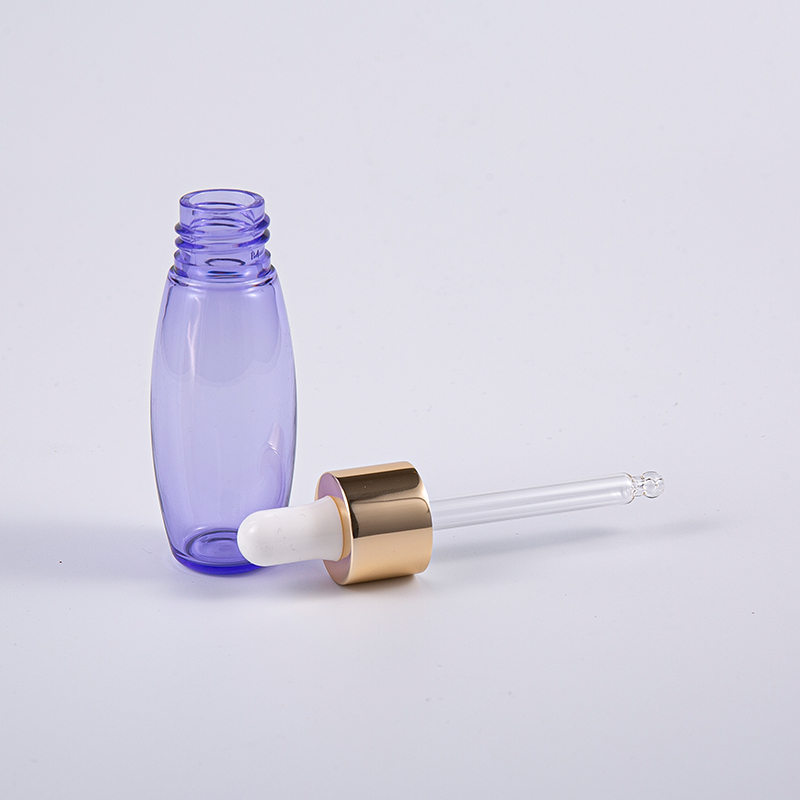 Small-Volume PETG Dropper Bottle SeriesPETG dropper bottles in 10–50 ml sizes suit samples, travel sets, and small cosmetic formulations, with a refill-minded design for reuse.View Product →
Build a Simple Reuse Kit
A small kit makes reuse feel less like a chore. Put a clean dropper bottle, a spare cap, a waterproof label, and a small cloth pouch in one place. When a product runs out, you already know where the next bottle will go. For travel, sampling, or gift sets, a compact 30–50 ml dropper bottle is often the most practical size: it holds enough for several uses without becoming heavy or bulky.
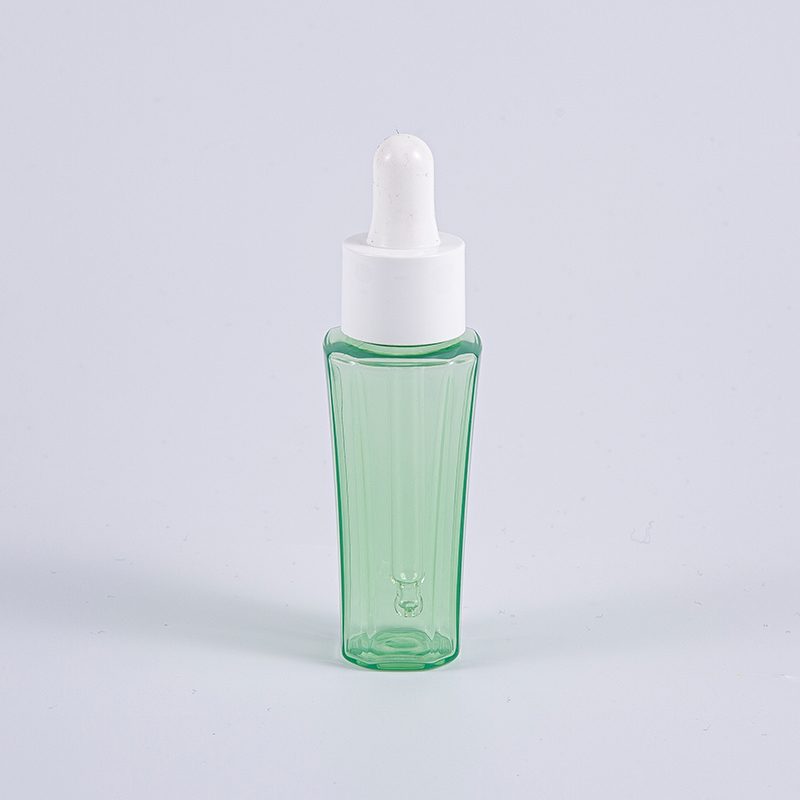 30ml and 50ml Irregular PETG Dropper BottlesIrregular-shape 30 ml and 50 ml PETG dropper bottles suit samples, travel products, and small-volume formulations; check for wear before reuse.View Product →
When to Retire and Recycle
Reuse has limits. Retire a dropper bottle if the glass is chipped, the plastic has turned cloudy or brittle, the cap no longer seals, the pipette is bent or clogged, or a strong scent will not wash out. If the bottle held a potent essential oil or an active skincare formula, the material may have aged in ways you cannot see.
Before recycling, empty and rinse the bottle, remove the dropper, and separate the parts according to your local rules. Glass, plastic, and silicone often go in different streams. An oily bottle should be cleaned first because residue can contaminate a recycling batch.
A Final Word on Reusing Dropper Bottles
The best reuse is the one you can trust. Choose a sound bottle, clean every part, dry it fully, and match the second use to what the bottle was made for. A few well-kept dropper bottles can replace a drawer full of single-use minis, and they make your daily routine a little more precise along the way.
PREV:How to Wrap Shampoo Bottles: Practical Gift and Retail Packaging Tips for BrandsNEXT:How to Make Makeup Containers: A Practical Guide from Design to Production
Interested in cooperation or have questions?
Subscribe to us and
get the latest updates.
get the latest updates.
Stay In Touch

Product Links
Contact Us
-
Phone: +86-13567569350
-
Tel: +86-575-82575298
-
Email: [email protected]
-
Add: No. 5 Plant, Zhejiang Tengxin New Energy Industrial Park, Daoxu Street, Shangyu District, Shaoxing City, Zhejiang Province, China.
-
South Korean company: 태미코스
Tel: 010-5617-6888
Add: 서울특별시 금천구 가산동 60-46 더리즌밸리 801호
Copyright © Shaoxing Lizhi Plastic Products Co., Ltd.