


 English
 中文简体
 Français
How Do Pump Bottles Work? The Complete Mechanics of Cosmetic Pump Dispensers
Content
Every morning, millions of people press the top of a pump bottle to dispense face wash, moisturizer, or sunscreen. The action feels effortless, yet behind that small plastic mechanism is a carefully engineered system of springs, pistons, and valves. Understanding how pump bottles work is more than a matter of curiosity — it explains why some products dispense smoothly while others clog, and why the quality of a pump can completely change the user experience of a cosmetic product.
The Anatomy of a Pump Bottle
Before examining the mechanism, it helps to identify the parts. A standard lotion pump is assembled from several small components, each with a specific job:
- Actuator — the button you press, which also contains the nozzle opening.
- Closure — the cap that secures the pump to the bottle neck.
- Pump stem — the shaft that connects the actuator to the internal piston.
- Piston — a moving seal inside the pump chamber that generates pressure.
- Spring — the component that returns the piston to its resting position.
- Dip tube — a plastic tube reaching toward the bottom of the bottle, carrying product upward.
- Check valve — a small ball or disc that lets liquid flow in only one direction.
These parts work together to achieve a single goal: moving a measured amount of product from the bottle to the nozzle, while keeping the remaining contents sealed and protected from air.
How a Standard Lotion Pump Works
The working principle of a pump bottle is based on atmospheric pressure and the vacuum created inside the pump chamber. When you press the actuator, liquid is forced out; when you release it, suction pulls fresh product up from the bottle. Here is what happens step by step:
- Press the actuator down. The stem drives the piston into the pump chamber, compressing the spring and pressurizing the liquid already trapped inside.
- Because the check valve at the bottom of the chamber stays closed under pressure, the liquid has only one way out — upward through the stem and out through the nozzle.
- Release the actuator. The spring expands, pushing the piston back up to its original position.
- The upward movement creates a vacuum in the pump chamber, which opens the check valve at the bottom.
- Atmospheric pressure, acting on the surface of the liquid inside the bottle, pushes product up the dip tube and into the chamber.
- Once the chamber is full, the check valve closes again, and the pump is ready for the next press.
This cycle repeats hundreds or even thousands of times over a bottle's life. Each press delivers a consistent dose, which is one of the main reasons pump bottles are so widely used in personal care packaging.
Common Types of Pump Mechanisms
While the basic principle remains the same, not every pump bottle works identically. Different product textures and usage habits call for different pump mechanisms:
Lotion Pumps
Lotion pumps are the default choice for creamy, semi-viscous formulas such as body lotion, facial cleanser, and sunscreen. They provide controlled dosing and work reliably with products of medium to high viscosity. The mechanism described above is found in most everyday cosmetic bottles, from compact travel sizes to larger household dispensers.
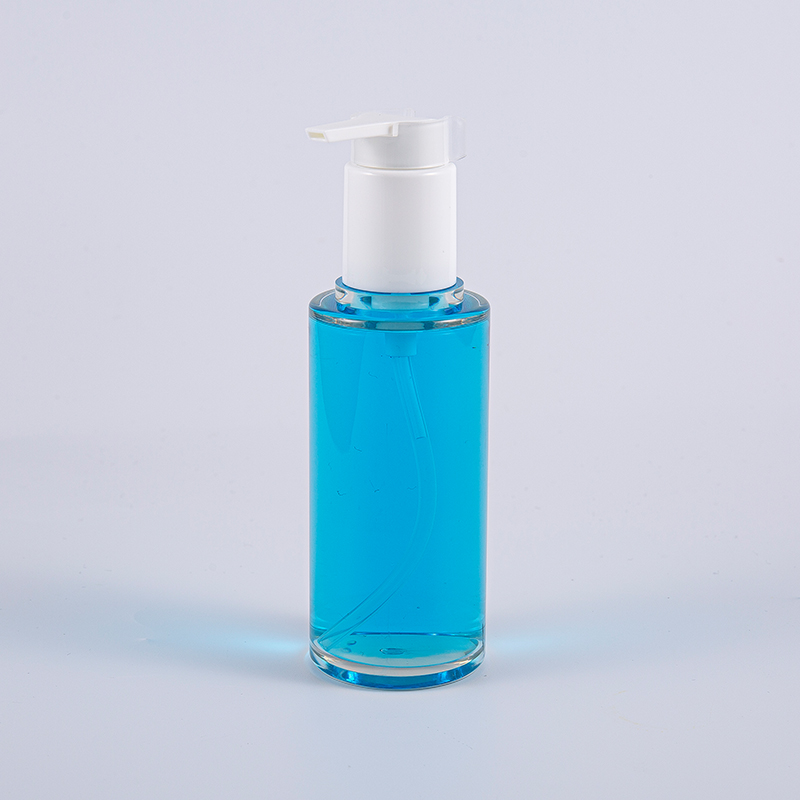 Clear PETG 100ml Round Lotion Bottle with Plastic PumpThis thick-wall PETG bottle suits lotions and serums, offering reliable dosing for medium to high viscosity formulas like body lotions and sunscreens.View Product →
Foaming Pumps
Foaming pumps add a second function to the same principle: they mix air with the liquid inside the pump chamber. When a lower-viscosity formula is pulled in, it is combined with air in a mixing chamber and pushed out as a dense foam. This is why foam pumps work well for facial cleansers and hand soaps, where a small amount of product can produce a generous lather.
 50ml Foam Pump Bottle for Cleansers and Makeup RemoversDesigned for foam-based products, this compact 50ml PET bottle works well for facial cleansers and hand soaps, producing rich lather from small amounts.View Product →
Trigger Sprayers
Trigger sprayers use a similar piston-and-valve system but are oriented horizontally and designed to deliver a fine mist over a larger area. They are commonly used for toners, facial mists, and cleaning solutions where even coverage matters more than precise dosing.
Airless and Vacuum Pumps
Airless pumps, also called vacuum pumps, work on a different principle. Instead of using a dip tube, the product sits inside a collapsible inner bag or rests above a rising piston at the bottom of the bottle. As product is dispensed, the bag collapses or the base rises to take up the empty space, so no air ever enters the container. This makes airless pumps ideal for sensitive formulations such as serums and active skincare products that can degrade when exposed to oxygen. You can read more about why these containers are so effective at preserving freshness in our detailed guide to inner-bag vacuum bottles.
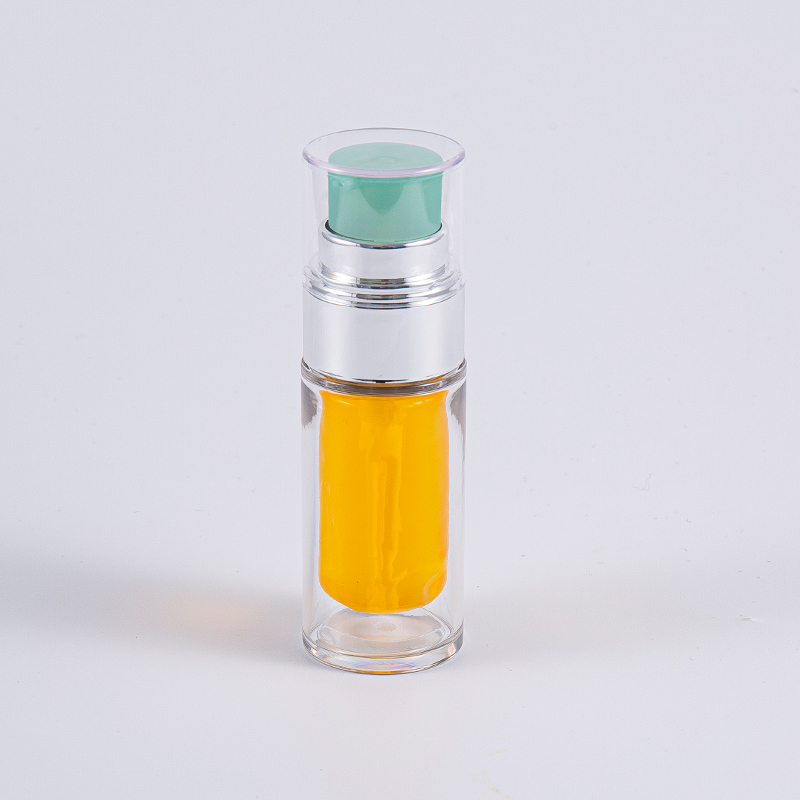 Multi-Layer Inner Bag Vacuum Bottles in 30ml and 50mlThese PETG vacuum bottles protect air-sensitive skincare formulas like serums and vitamin C, using collapsible inner bags to prevent oxidation and contamination.View Product →
Choosing the Right Pump for Your Product
For brands developing a new cosmetic or personal care product, selecting the right pump is as important as choosing the bottle itself. The table below summarizes the main pump types and their best uses:
| Pump Type | Best Suited For | Viscosity Range | Key Advantage |
|---|---|---|---|
| Lotion pump | Body lotions, cleansers, sunscreens | Medium to high | Precise dosing; suits most formulas |
| Foaming pump | Face washes, hand soaps | Low to medium | Air is mixed in for a rich lather |
| Trigger sprayer | Toners, facial mists, sprays | Low | Even mist coverage over large areas |
| Airless / vacuum pump | Serums, creams, active formulas | Low to high | No air exposure; high evacuation rate |
Material compatibility is equally important. The pump's internal plastic parts must be compatible with the formula — certain oils, acids, and preservatives can affect plastic seals or springs over time. Working with a packaging manufacturer that can test the assembled bottle and pump together with your formula is the safest approach.
Common Pump Problems and How to Prevent Them
Even well-designed pump bottles can run into trouble if the mechanism and the product are not a good match. Here are the typical issues customers encounter and how to prevent them:
Clogged Nozzles
Products that dry quickly, such as certain sunscreens or clay-based cleansers, can leave residue that hardens in the nozzle. Wiping the nozzle after use and choosing a pump with a simple, clean actuator design helps reduce this issue.
Loss of Suction
If a pump stops drawing product up, the check valve or piston may be worn, or the dip tube may not reach the liquid level. This often comes down to the quality of the internal components — a well-made spring and precisely molded piston will remain reliable for the entire life of the bottle.
Leaking Around the Cap
Leaks are usually caused by a mismatched closure, an overfilled bottle, or pressure changes during transport. Testing the assembled bottle and pump together before filling is the best way to catch this problem before products reach the shelf.
Pump Bottles: A Small Mechanism with a Big Job
Pump bottles may look simple, but they are the result of decades of refinement in materials, molding precision, and mechanical design. Whether a brand chooses a classic lotion pump, a foaming dispenser, or an airless vacuum system, the decision affects how the product is perceived, how easily it is used, and how long it stays fresh after opening.
At Shaoxing Lizhi Plastic Products, we match bottle designs with the pump mechanisms that work best for the intended formula, so brands can launch with confidence. And when it comes time to fill or refill your packaging, careful handling of the pump and bottle makes a real difference — you can find practical advice in our article on refilling lotion bottles successfully.
If you are developing a new cosmetics or personal care product and want a pump bottle that performs reliably from the first press to the last, our team is ready to help with design, sampling, and production. Good packaging does more than hold a product — it makes the product a pleasure to use.
PREV:How to Choose an Airless Bottle: The Complete Packaging Guide for Skincare BrandsNEXT:How Do Airless Pump Bottles Work? A Packaging Insider's Guide for Brands
Interested in cooperation or have questions?
Subscribe to us and
get the latest updates.
get the latest updates.
Stay In Touch

Product Links
Contact Us
-
Phone: +86-13567569350
-
Tel: +86-575-82575298
-
Email: [email protected]
-
Add: No. 5 Plant, Zhejiang Tengxin New Energy Industrial Park, Daoxu Street, Shangyu District, Shaoxing City, Zhejiang Province, China.
-
South Korean company: 태미코스
Tel: 010-5617-6888
Add: 서울특별시 금천구 가산동 60-46 더리즌밸리 801호
Copyright © Shaoxing Lizhi Plastic Products Co., Ltd.