


 English
 中文简体
 Français
How to Choose the Right Plastic Bottle for Skincare: A Practical Guide
Content
- 1 1. Start with the formula, not the bottle
- 2 2. Choose the right plastic material
- 3 3. Match the closure and structure to the way customers use the product
- 4 4. Think about size from both the brand and the customer side
- 5 5. Let the bottle carry your brand values, including sustainability
- 6 6. Work with a supplier who asks questions
Choosing a plastic bottle for skincare can look straightforward, and then a small detail flips everything: the pump delivers too much, the material reacts with your essential oil, or the bottle feels flimsy in hand. After more than a decade of manufacturing skincare packaging, we have seen these small problems become big headaches for otherwise excellent products. The good news is that a systematic approach removes most of the guesswork. This guide walks through the practical steps we use with our own customers, from matching the resin to the formula to choosing a pump that makes people reach for the bottle again.
1. Start with the formula, not the bottle
Before you browse bottle catalogues, write down the basic facts about your product. Three details matter most.
- Viscosity. Does it flow like water, pour like syrup, or sit like a thick balm? A thin toner works well with a sprayer or flip-top cap. A medium lotion needs a pump. A rich body butter may need a wide-mouth jar so the customer can scoop out the last gram.
- Sensitivity. If your formula contains vitamin C, retinol, botanical extracts or sunscreen filters, it may be sensitive to oxygen, light or moisture. Fragile actives usually prefer an airless or multilayer barrier rather than a simple screw-cap bottle.
- Dosage. How much does a customer use per application? A serum with a pump that doses three millilitres per press may be finished twice as fast as intended, and the customer will blame the packaging.
Answering these three questions first will make every later decision easier, from material to closure to bottle size. A brand is often tempted to pick a pretty bottle first and adjust the formula later. In our experience, that order tends to create problems in stability testing, filling speed and customer complaints. Reverse it, and the bottle becomes a tool that quietly supports the product instead of fighting it.
2. Choose the right plastic material
The main plastics used in skincare bottles are PET, PETG, PE and PP. Each has its own personality, and none is universally better than the others.
| Material | Key strengths | Considerations | Typical use |
|---|---|---|---|
| PET | Clear, glass-like, affordable, recyclable | Limited heat resistance | Toners, makeup removers |
| PETG | Excellent clarity, good chemical resistance, easy to mould into thick walls | Slightly higher cost than PET | Serums, lotions, thick-wall bottles |
| PE (HDPE) | Tough, squeezable, chemical resistant, economical | Translucent rather than fully clear | Body lotion, shampoo, sunscreen |
| PP | Heat resistant, good compatibility with many formulas | Less transparent, usually needs additives for a glossy look | Cream jars, some lotion bottles |
Each material also behaves differently on a filling line. PET bottles are rigid and glass-like, which makes them easy to label but less squeezable. PE bottles are softer and forgiving, which is why they are a favourite for lotions and body washes. Knowing how the bottle will be held, squeezed and stored helps you eliminate options early.
For a lightweight but premium feel, many brands turn to PETG thick-wall bottles. The material takes on a smooth, glass-like appearance while staying shatterproof, and the extra wall thickness gives a satisfying weight that customers associate with quality.
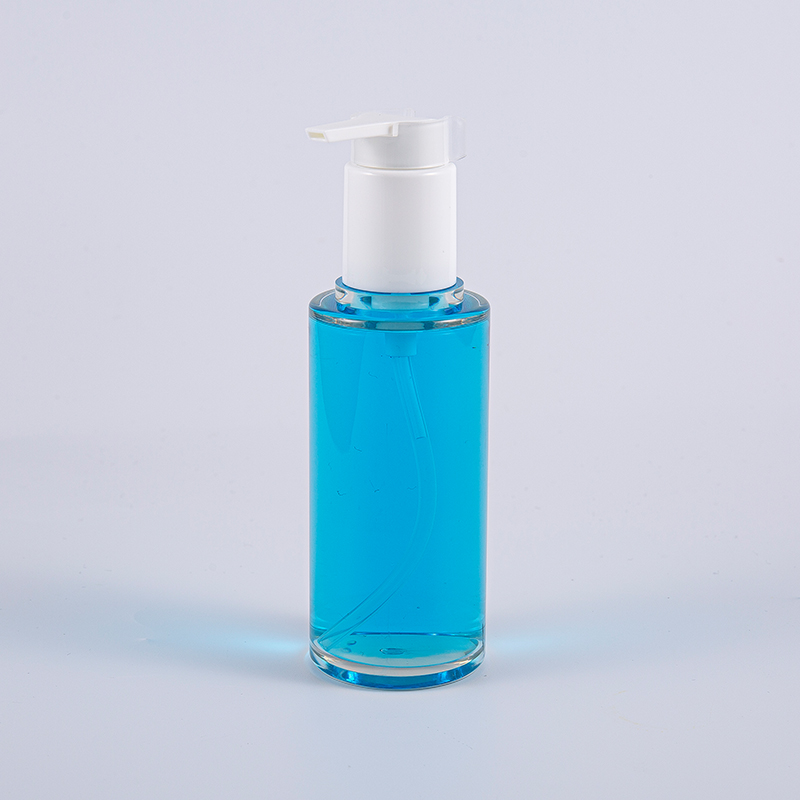 Clear PETG Round Lotion Bottle with PumpThis 100ml PETG bottle offers a glass-like, premium feel while staying shatterproof. Its thick wall and smooth finish make it ideal for lightweight skincare packaging, with a reliable white pump for convenient dispensing.View Product →
3. Match the closure and structure to the way customers use the product
The closure is not an afterthought; it controls how much air and moisture touch the formula and how convenient the product feels. Here is a quick field summary from our shop floor.
- Screw cap: simple, low-cost, works well for cotton-pad toners and sample sizes. The downside is the wide opening, which exposes the formula to air each time it is opened.
- Flip-top cap: one of the best options for shampoos, body washes and conditioners that people use every day without wanting to unscrew a lid.
- Standard pump: a reliable workhorse for lotions and sunscreens. It doses a controlled amount, but most standard pumps let air back into the bottle after each press.
- Airless or inner-bag vacuum pump: the safest choice for active-rich formulas. As the user presses the pump, a piston or an inner bag collapses, so the formula is never exposed to incoming air.
- Dropper: precise and elegant for concentrated serums, but the formula is exposed each time the dropper is removed.
If your formula contains antioxidants, peptides or vitamin derivatives, we usually recommend testing an inner-bag vacuum bottle before committing. The difference in shelf life can be dramatic.
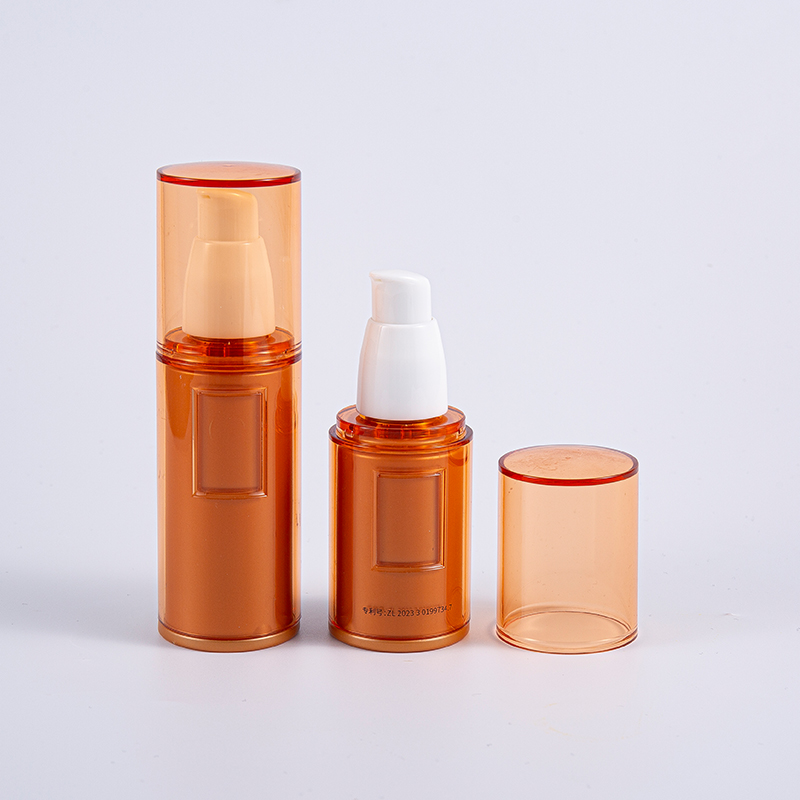 Refillable 40ml Inner Bag Airless Pump BottleAn airless vacuum bottle that protects serums and lotions from oxidation, extending shelf life. The inner bag and pump minimize waste, and the refillable design supports sustainable packaging.View Product →
4. Think about size from both the brand and the customer side
Capacity affects price, portability and brand perception. A 30 ml dropper bottle says concentrated and precious; a 1000 ml pump bottle says professional and economical. Align the size with the usage cycle of your product. Here is the rough rule of thumb we share with clients:
- 10 ml to 30 ml: samples, gifts, travel sets and trial sizes.
- 30 ml to 50 ml: serums, facial oils, concentrated creams and sunscreen for daily portability.
- 100 ml to 200 ml: facial lotions, body lotions and hair conditioners.
- 300 ml and above: body washes, shampoos and makeup removers used in large amounts.
For sunscreens, the 30 ml and 50 ml formats remain the most popular for daily and travel use. A compact PE bottle with UV protection and a reliable seal is a smart choice when you want customers to test the formula before trusting it with their summer bag.
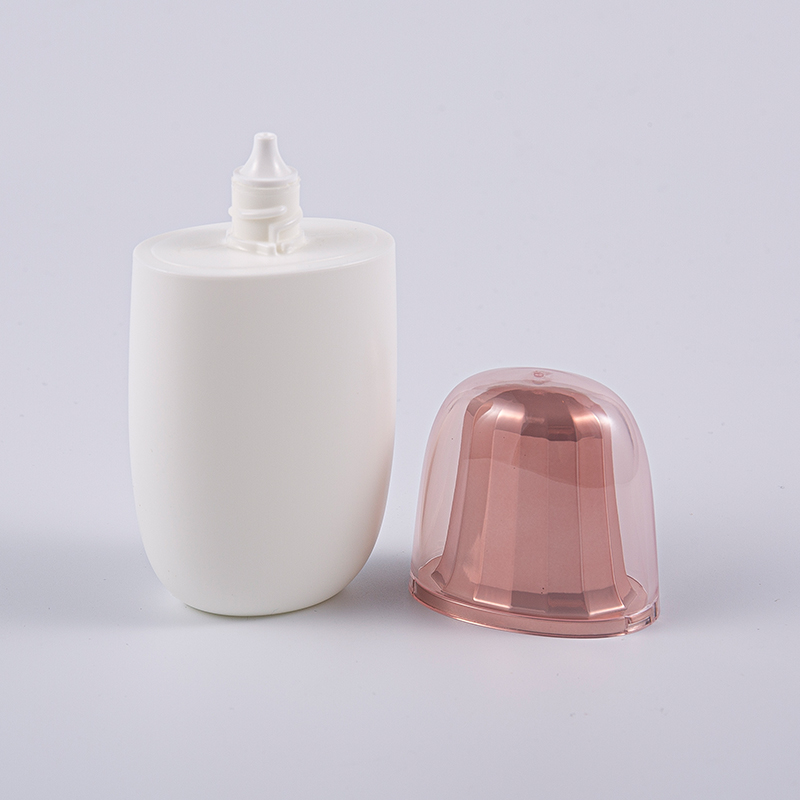 Eco-Friendly Travel Sunscreen Bottle with UV ProtectionThese 30ml and 50ml PE-EVOH bottles shield sunscreen formulas from UV and oxidation, preserving active ingredients. Compact and precise, they suit daily use and travel, with a hygienic pump head.View Product →
If your bottle is likely to sit in a shower or gym bag, consider ergonomic details: an inverted bottle for a thick conditioner, a soft-touch grip for a body wash, or a narrow neck for a toner that will be poured onto a cotton pad.
5. Let the bottle carry your brand values, including sustainability
Customers notice packaging long before they finish the formula. Colour, surface finish and label design all contribute to the unboxing moment. But brand image is not only about beauty; it is also about responsibility. Recyclable materials such as PET, PE and PP are available in many formats, and refillable or vacuum designs reduce waste while keeping the formula fresh. Even a small step such as choosing a single-material bottle with a removable pump can make the pack easier to recycle and more honest in front of a conscious customer.
For a more detailed view of how to balance safety, functionality and sustainability in a skincare bottle, read our guide to plastic bottle selection for skincare.
6. Work with a supplier who asks questions
The final step is the simplest to overlook. A good packaging manufacturer should ask about your formula, your filling conditions and your target market before recommending a bottle. If you are not ready to design a custom mould, start with a standard bottle that fits your product and test it with the actual formula. Check the pump dosage, the closure seal and how the plastic behaves when your factory fills it.
Choosing a plastic bottle for skincare becomes much easier when you have a trustworthy partner beside you. We have spent years helping brands refine their packaging step by step, and we are happy to do the same for you. Explore our range of skincare bottles or contact us to discuss your next launch.
PREV:No previous articleNEXT:How to Choose an Airless Bottle for Lotion: A Practical Packaging Guide
Interested in cooperation or have questions?
Subscribe to us and
get the latest updates.
get the latest updates.
Stay In Touch

Product Links
Contact Us
-
Phone: +86-13567569350
-
Tel: +86-575-82575298
-
Email: [email protected]
-
Add: No. 5 Plant, Zhejiang Tengxin New Energy Industrial Park, Daoxu Street, Shangyu District, Shaoxing City, Zhejiang Province, China.
-
South Korean company: 태미코스
Tel: 010-5617-6888
Add: 서울특별시 금천구 가산동 60-46 더리즌밸리 801호
Copyright © Shaoxing Lizhi Plastic Products Co., Ltd.