


 English
 中文简体
中文简体 Français
how to get lotion out of bottle: Applications, Selection Criteria, and Practical Guidance
Content
Every bathroom shelf hides the same small mystery: a lotion bottle that looks empty, feels heavy, and refuses to give up its last few grams. You shake it, squeeze it with both hands, even stand it on its head, and the pump still hisses out nothing but air. We understand this frustration better than most. As a cosmetic plastic bottle manufacturer since 2010, we have spent years studying how lotions move, cling, and hide inside packaging. Below you will find the rescue tricks we recommend, a comparison of when each method works best, and an honest look at how bottle design decides how much product you will ever have to fight for.
Why Lotion Gets Stuck in the First Place
Lotion is an emulsion of fine oil droplets suspended in water, and that structure is exactly why it clings. Thick formulas grip the inner walls and settle into every corner a pump dip tube cannot reach. A few design details make the problem worse:
- A narrow neck slows gravity and traps product at the shoulder.
- A standard pump straw stops one or two centimeters above the lowest point of the bottle.
- Air pockets form beneath shoulders and sloped inner floors.
- Cold bathrooms thicken the formula, so it flows even less willingly.
In a 200 ml bottle, the unreachable remainder often adds up to 10 to 20 ml of perfectly good product. Multiply that by every bottle in your shower caddy, and learning how to get lotion out of a bottle suddenly feels like ten minutes well spent.
Seven Ways to Get Lotion Out of a Bottle
These are the methods we suggest, roughly in the order we would try them:
- Give the bottle a warm water bath.
- Store it upside down overnight.
- Add a little warm water and swirl.
- Scrape the walls with a spatula or cotton swab.
- Tap, shake, and roll the bottle.
- Reach the corners with a straw or syringe.
- Cut the bottle open as a last resort.
The Warm Water Bath
Hold the closed bottle under hot tap water for one to two minutes, or stand it in a bowl of warm water. Heat thins the emulsion so it flows toward the pump instead of clinging to the walls. Dry the bottle, prime the pump slowly, and you will usually recover several more uses. Never microwave a plastic bottle, because uneven heat can deform both the container and the formula.
Upside-Down Storage
Gravity is free labor. Rest the bottle on its cap overnight, and by morning the remaining lotion pools right at the neck where the pump or opening can reach it. This trick is so dependable that entire packaging categories are built around it. Inverted bottles with flip-top caps are designed to stand on their heads, keeping dense products such as conditioner and sunscreen ready at the valve at all times.
Water and Swirl
When only a film remains, pour in a teaspoon of warm water, close the bottle, and shake vigorously. You get a thin, milky liquid that works nicely as a light body lotion. Use it within a few days, and skip this method for anything that must stay undiluted, such as SPF formulas or products with strict preservation requirements.
Cutting It Open
If you can see a layer of product through clear plastic and nothing else has worked, clean kitchen scissors will recover the most. Cut the bottle in half around the middle, scoop out what is left with a spoon or spatula, and transfer it to a small jar with a lid. Use the rescued lotion within a week, and recycle both halves rather than reusing the cut container.
Quick Comparison of the Methods
Different bottles respond differently, so here is how the seven approaches stack up:
| Method | Works Best For | Keep in Mind |
|---|---|---|
| Warm water bath | Pump and squeeze bottles | Cap tightly; never microwave |
| Upside-down storage | Thick lotions in pump bottles | Needs a flat, stable cap |
| Water and swirl | Nearly empty body lotions | Use the diluted mix quickly |
| Spatula or swab | Wide-neck bottles and jars | Narrow necks limit reach |
| Tap and roll | Soft PE bottles and tubes | Pair with pumping or squeezing |
| Straw or syringe | Decanting for travel | Clean the tools thoroughly |
| Cutting open | Clear PET and PETG bottles | Final step before recycling |
Getting Lotion Out for Travel and Refills
Sometimes you are not rescuing the last drops; you are moving product on purpose. Decanting into a 30 to 50 ml travel bottle is the easiest way to take your favorite lotion on a flight, and the same tools help: a small plastic funnel for wide openings, a clean syringe for thick formulas, or the original pump pressed firmly against the new bottle's neck. Wash your hands, make sure the receiving container is clean and dry, and fill to about three-quarters so pressure changes cannot push the cap open. For a full walkthrough of container sizes, tools, and filling techniques, our step-by-step guide on how to put lotion in a bottle covers the whole process.
How Bottle Design Makes Emptying Easier
After more than a decade of supplying bottles to beauty brands, we can say this plainly: how easily a bottle empties is decided on the drawing board, not in the bathroom. Four design choices matter most.
Pump Geometry
A pump is convenient, but a poorly matched one strands product below the dip tube. Shorter tubes, wider inlets, and pump chambers sized to the bottle's inner floor all raise the evacuation rate, which is why we test every closure and bottle pairing before it goes into production.
Inverted Shapes
Inverted packaging turns gravity into the dispensing mechanism. Because the product sits permanently above the opening, almost nothing is left behind, even with dense conditioners and sunscreens.
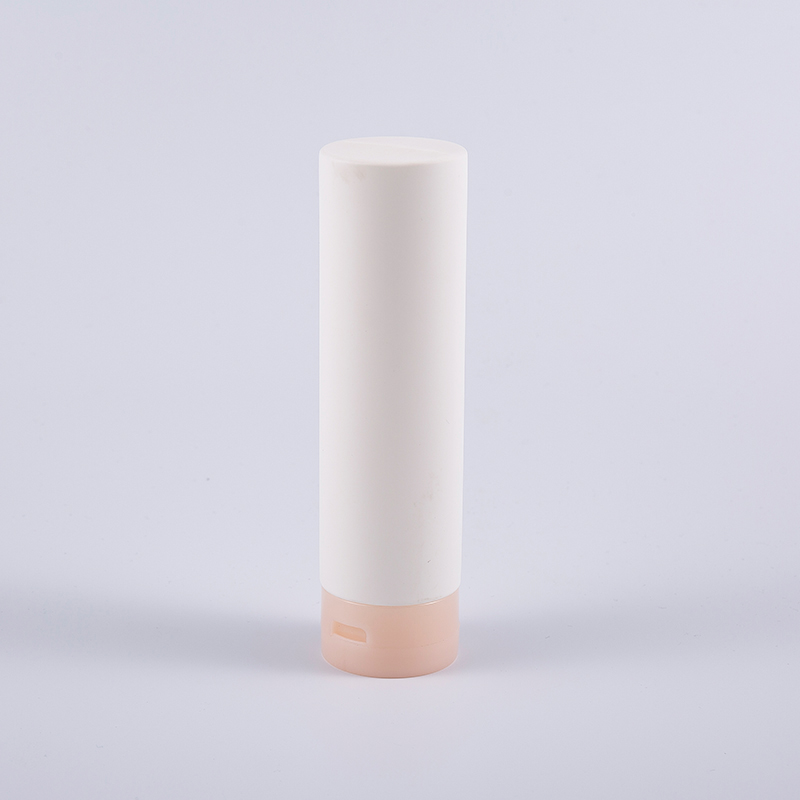 White Soft Touch Round Inverted 180ml PE Hair Conditioner Cleansing Bottle With Flip Top CMaterial: Made from PE (Polyethylene)material, a durable, lightweight, and flexible plastic that is resistant to chemicals and impact, making it ideal for holding hair...View Product →
Airless Inner-Bag Systems
The most elegant answer is airless packaging. In an inner-bag vacuum bottle, a flexible pouch collapses as you pump, so air never re-enters and the walls cannot hide anything. Evacuation is close to total, and sensitive formulas stay sealed away from oxygen. Our explainer on what a vacuum bottle is used for explains the system in more depth.
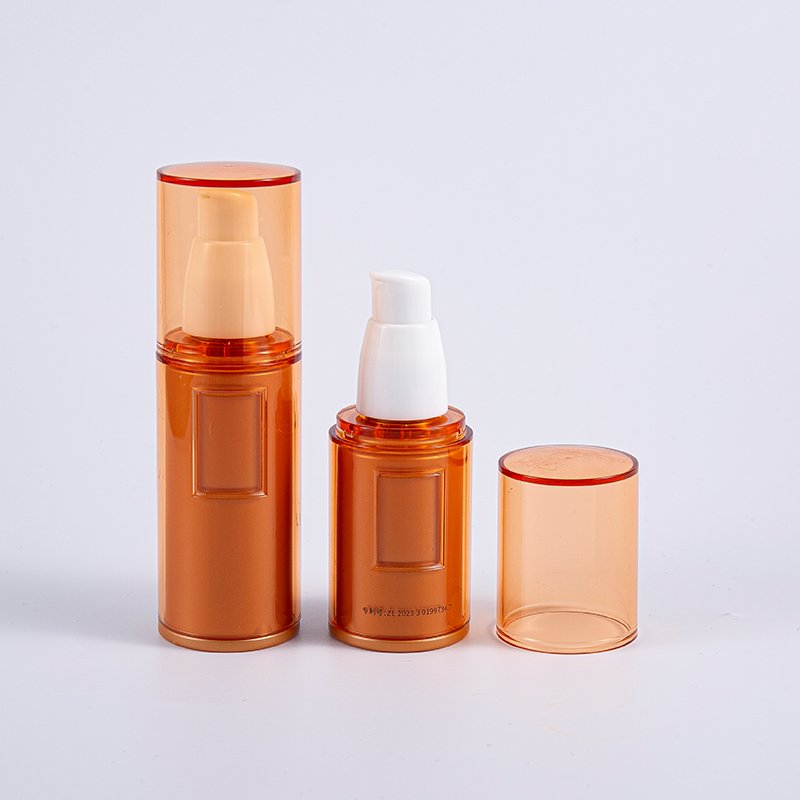 Refillable Cosmetic Container 40ml Inner Bag Vacuum Bottle with Airless PumpPreserves Product Freshness: The vacuum design prevents air from entering, reducing oxidation and extending the shelf life of the contents. Minimizes Waste: The inner ...View Product →
Wide-Mouth Jars
Jars sidestep the problem entirely, because your fingers or a small spatula reach every corner. Thick-wall PETG jars pair that practical access with the substantial, premium feel many brands want for face creams and masks.
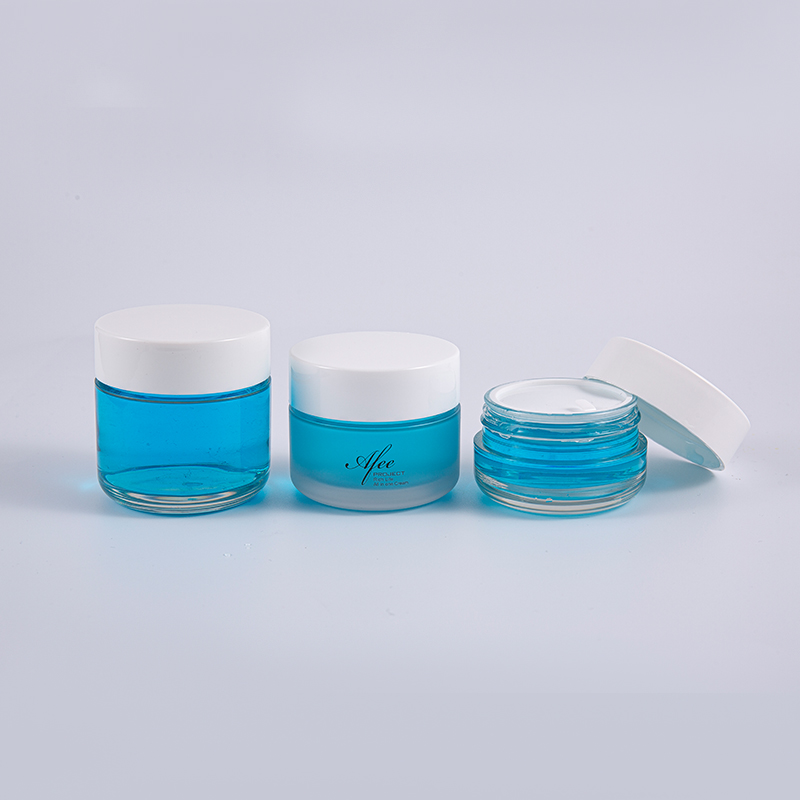 Transparent Round Shape PETG 50g Thick Wall Cream Jar With White Screw CapProduct Name :PETG Cream Jars (50g, 80g, 120g) Material: Made from high-quality PETG (polyethylene terephthalate glycol), ensuring durability, transparency, and excell...View Product →
A Few Honest Reminders
Rescued product is still product, so treat it with care. Never dilute a formula that must stay at full strength, and check the color, smell, and texture before using anything that has been sitting in a cut-open bottle. If a lotion has separated or developed an off smell, let it go; no amount of product is worth an irritated patch of skin. Once the bottle is truly empty, rinse it and place it in the correct recycling stream so the packaging itself gets a second life.
Emptying a lotion bottle completely asks for a little patience, but every trick above costs nothing and uses things you already own. If you are reading this as a brand owner rather than a consumer, take the lesson to heart: evacuation-friendly packaging, whether inverted shapes, airless inner bags, or generous wide mouths, quietly improves the customer experience while reducing waste. From our side of the industry, the best bottle has always been the kind you never have to fight with.
PREV:No previous articleNEXT:How to Use a Cosmetic Vacuum Travel Bottle: Step-by-Step Filling & Refill Guide
Interested in cooperation or have questions?
Subscribe to us and
get the latest updates.
get the latest updates.
Stay In Touch

Product Links
Contact Us
-
Phone: +86-13567569350
-
Tel: +86-575-82575298
-
Email: [email protected]
-
Add: No. 5 Plant, Zhejiang Tengxin New Energy Industrial Park, Daoxu Street, Shangyu District, Shaoxing City, Zhejiang Province, China.
Copyright © Shaoxing Lizhi Plastic Products Co., Ltd.