

 English
 中文简体
 Français
How to Make Makeup Containers: A Practical Guide from Design to Production
Content
- 1 1. Define the Packaging Brief Before You Cut Steel
- 2 2. Design the Container Around the Formula
- 3 3. Choose the Material and Structure
- 4 4. Build a Prototype and Test the Whole System
- 5 5. Tooling, Molding, and Production
- 6 6. Decoration and Assembly
- 7 7. Quality Control and Filling Compatibility
- 8 8. Balance Sustainability, Cost, and Timing
- 9 A Practical Path from Idea to Shelf
Making a makeup container is not one action on a production line. It is a chain of decisions that begins with the formula inside and ends with a filled pack that survives transit and daily use. Brands often ask us how to make makeup containers because the answer affects cost, lead time, and the customer experience. This guide covers the commercial route for plastic bottles and jars: brief, material, structure, prototype, tooling, molding, decoration, assembly, and quality control. For the wider menu of shapes, see our guide to cosmetic plastic bottle types.
1. Define the Packaging Brief Before You Cut Steel
A one-page brief prevents most expensive surprises. Write down what goes inside, how it behaves, and how the user will dispense it. Include fill volume, shelf life, closure, decoration, order quantity, and destination market. If the formula contains alcohol, fragrance, or acids, say so early; the container is part of the product system, not a separate purchase.
- Formula and compatibility risks
- Fill size and dose per use
- Pump, cap, dropper, or spray
- Decoration and shelf presentation
- Compliance documents for the market
- Volume, launch date, and target cost
A good brief also lets your packaging partner recommend a standard mold before a custom tool becomes necessary.
2. Design the Container Around the Formula
Two products can look similar and need very different containers. A clear toner or makeup remover may suit a simple PET bottle. An oxygen-sensitive serum or liquid foundation may need an airless system that keeps air out and dispenses a controlled dose. A thick cream may suit a jar, while a runny lotion needs a pump or squeeze bottle. Viscosity, pH, fragrance, and preservative system all influence the choice.
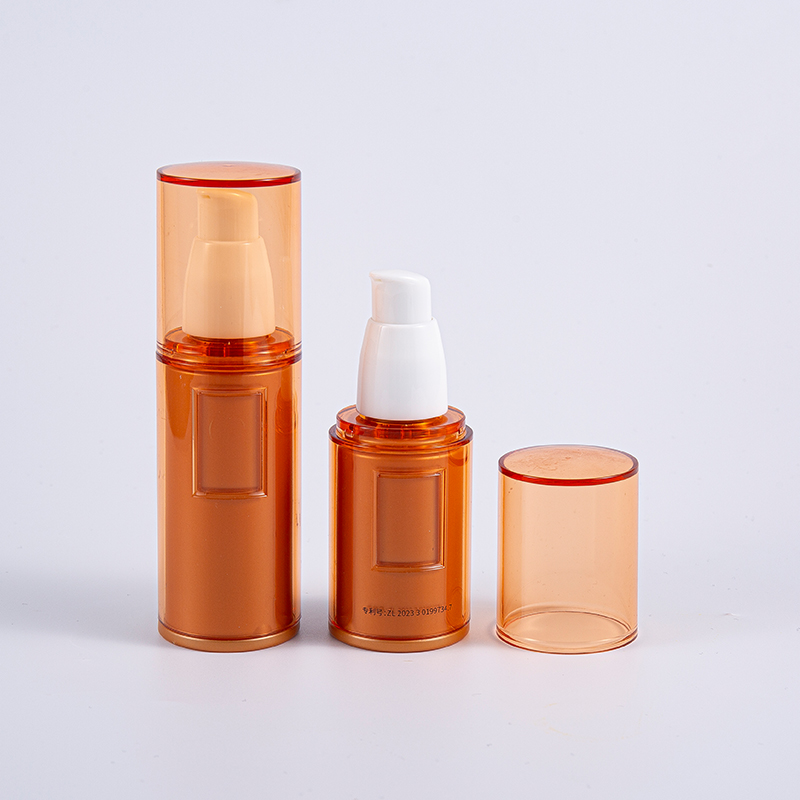 40ml Inner Bag Vacuum Bottle with Airless PumpRefillable 40ml airless bottle whose inner bag minimizes air contact and supports precise dosing for oxygen-sensitive serums and lotions.View Product →
For oxygen-sensitive formulas, an inner-bag vacuum bottle separates the product from air and most of the pump mechanism. The bag collapses as the user pumps, so the formula meets fewer surfaces. That can help with stability and with a clean, precise dose. It also changes filling, so involve the filler early.
3. Choose the Material and Structure
Material choice balances appearance, protection, cost, and processing. PET gives clarity and stiffness for toner and makeup remover bottles. PETG supports thick, glossy walls for premium jars and lotion bottles. PE is forgiving for squeeze and wash-off products, while PP is common for caps. EVOH multilayer structures add an oxygen barrier for sunscreen and other sensitive formulas.
What each material does best
| Material | Best for | Key strengths | Watch-outs |
|---|---|---|---|
| PET | Toner, makeup remover, spray bottles | Clear, stiff, good for sharp shapes | Limited heat resistance; some solvents may craze it |
| PETG | Thick-wall jars and lotion bottles | Gloss, clarity, premium hand feel | Higher cost; scratches show more easily |
| PE | Cleansers, body wash, squeeze bottles | Tough, flexible, good chemical resistance | Less glass-like clarity |
| PP | Caps, closures, some jars | Heat and chemical resistance | Less transparent than PET |
| EVOH multilayer | Sunscreen, oxygen-sensitive formulas | Strong oxygen barrier | More complex structure and cost |
Structure matters as much as resin. A single-layer bottle is simple and cost-effective. A multilayer bottle adds barrier without changing the outside look. An inner-bag vacuum bottle adds dispensing control. A thick-wall jar adds weight and presence. None is automatically better; the right choice depends on the formula and brand position.
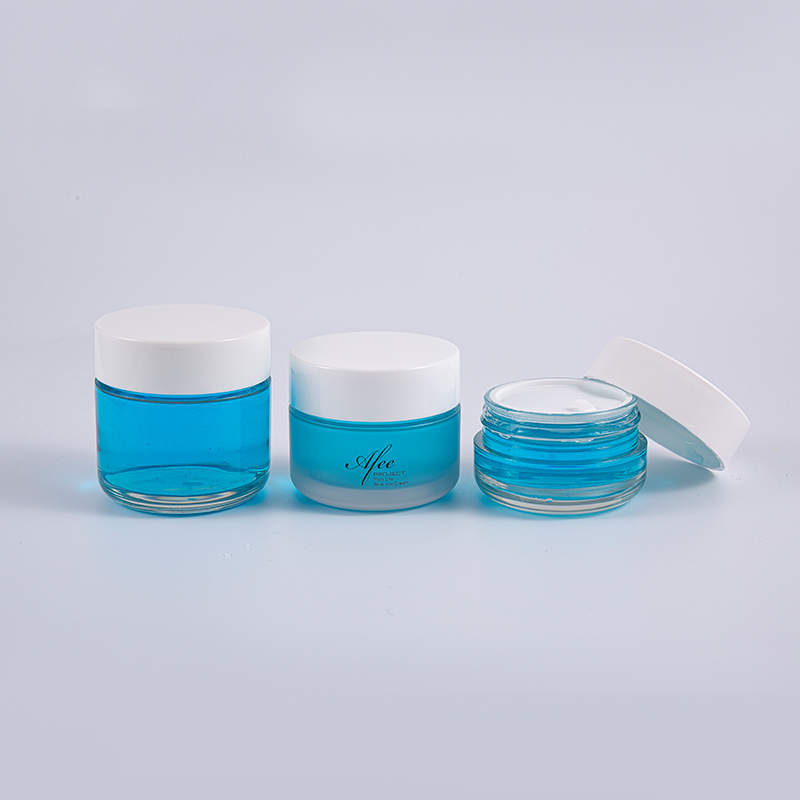 50g Thick-Wall PETG Cream Jar with White Screw CapClear round PETG jar with a thick-wall look and screw cap, suited to cream and balm packs where a substantial feel matters.View Product →
For a cream or balm, a 50 g thick-wall PETG jar gives a clear, substantial feel without the weight of glass. Check the wall, thread, and cap fit together, because a jar that looks right but feels loose will not pass a premium review.
4. Build a Prototype and Test the Whole System
Once the brief and drawing are agreed, make a physical sample. A good prototype is not just a shape: it should use the intended resin, weight, closure, pump, and a decoration trial if the design depends on print or finish. Fill it with a representative formula, not water alone. Water will not reveal how a fragrance or solvent interacts with the plastic, gasket, or decoration.
- Fill volume and headspace
- Pump dose, suck-back, and closure torque
- Leak and drop tests
- Label area, seams, and decoration alignment
- Carton or e-commerce pack fit
Rapid proofing saves time only when the sample is tested as a system. A beautiful bottle that leaks at the seam is still a failed prototype.
5. Tooling, Molding, and Production
If a suitable standard mold exists, production can often start without a new tool. A custom shape needs a mold, and mold design affects wall thickness, shrinkage, surface finish, and cycle time. Jars and caps are usually injection molded. PET bottles are commonly injection stretch blow molded, while PE and PP bottles are often extrusion blow molded. Each process has its own design rules, so a shape that works in one material may not transfer directly to another.
During production, resin is dried and heated, formed into a preform or parison, blown or pressed into the mold, cooled, trimmed, and checked. The details vary, but stable heat, stable pressure, and a clean mold produce repeatable parts. A rushed tool can cost more in rejects than it saves.
6. Decoration and Assembly
Decoration should follow material and shape, because surface energy and wall thickness affect how ink, foil, and coatings behave. Common options include screen printing, hot stamping, spray coating, UV coating, and labels. Each needs a wear test, especially for packs that travel in a bag or are handled with wet hands. Assembly brings the bottle, pump, cap, dropper, or inner bag together; it is where torque, alignment, and function are locked in.
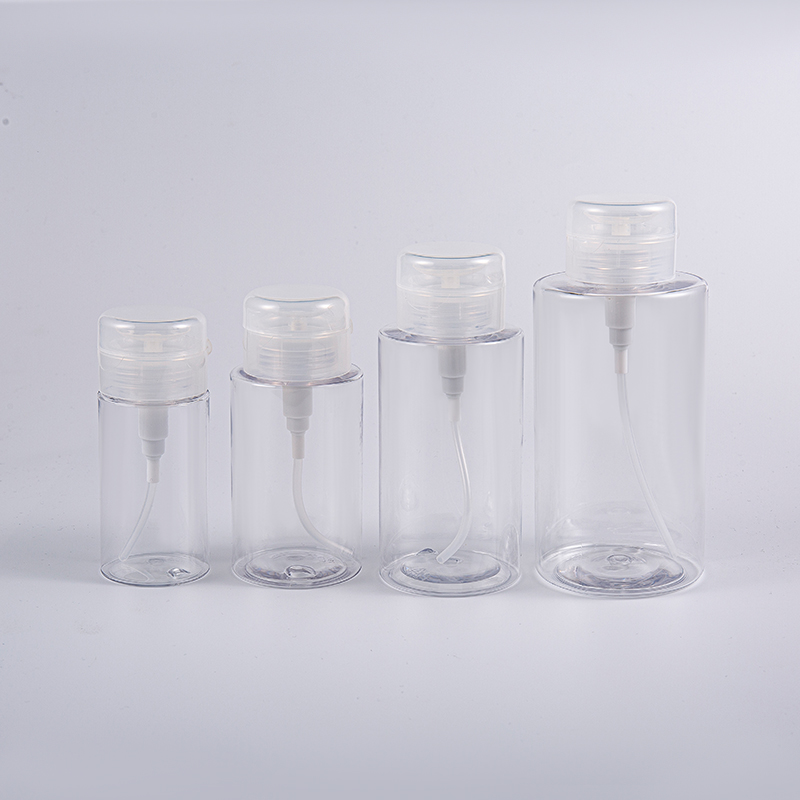 200ml Clear PET Makeup Remover BottleClear 200ml PET makeup remover bottle, also offered in 120ml, 300ml, and 500ml, with a transparent body for decoration and assembly checks.View Product →
A 200 ml makeup remover bottle looks simple, but it still has to pass leak, drop, and closure tests. The same applies to a decorated serum bottle: the print must survive filling, packing, and use, not just the approval photo.
7. Quality Control and Filling Compatibility
Quality control starts before the first carton leaves the factory. Dimensional checks, weight, color, closure torque, leakage, and drop resistance are basic. For cosmetic packaging, compatibility matters most: fill the actual formula into the actual container, store it under normal and elevated temperatures, and inspect for swelling, cracking, color change, or loss of function. A supplier can provide material and migration documents, but the brand and filler should still run a fill trial.
- Incoming resin and component checks
- In-process dimension and appearance checks
- Leak, vacuum, and drop tests
- Formula compatibility and storage checks
- Decoration adhesion and torque checks
Keep retain samples from each batch. If a problem appears months later, they are the fastest way to find the cause.
8. Balance Sustainability, Cost, and Timing
Sustainability choices work best when they are part of the brief, not a late add-on. Mono-material PET or PP can simplify recycling, while refillable inner-bag systems can reduce waste over repeated use. Lightweighting saves resin, but it may affect stiffness, drop resistance, and the premium feel of a thick-wall jar. PCR content and barrier structures each bring trade-offs in color, cost, and supply.
Cost is driven by tooling, resin, part weight, decoration, assembly, testing, and order quantity. A stock bottle with one-color print is usually the fastest and least expensive route. A custom thick-wall jar with hot stamping and a custom cap needs more tooling and approval. Neither is wrong; they serve different launch plans.
A Practical Path from Idea to Shelf
Making makeup containers well is a sequence of connected decisions. Start with the formula and the user experience. Choose a material and structure that protect the product without making filling harder. Prototype the complete pack, not just the bottle. Then lock the tool, control the process, decorate with care, and test the filled system. That path keeps a launch moving and reduces surprises after the purchase order is signed. If you are ready to compare shapes, our cosmetic packaging catalog is a good place to start.
PREV:No previous articleNEXT:How to Choose a Skincare Jar for Lotion: Material, Capacity, and Closure
Interested in cooperation or have questions?
Subscribe to us and
get the latest updates.
get the latest updates.
Stay In Touch

Product Links
Contact Us
-
Phone: +86-13567569350
-
Tel: +86-575-82575298
-
Email: [email protected]
-
Add: No. 5 Plant, Zhejiang Tengxin New Energy Industrial Park, Daoxu Street, Shangyu District, Shaoxing City, Zhejiang Province, China.
-
South Korean company: 태미코스
Tel: 010-5617-6888
Add: 서울특별시 금천구 가산동 60-46 더리즌밸리 801호
Copyright © Shaoxing Lizhi Plastic Products Co., Ltd.