


 English
 中文简体
 Français
How to Choose a Skincare Jar for Lotion: Material, Capacity, and Closure
Content
- 1 Start With the Formula, Not the Jar
- 2 Match the Material to the Product
- 3 Translate Fill Weight Into Capacity
- 4 Get the Neck, Thread and Closure Right
- 5 Decide How Much Wall You Are Paying For
- 6 Plan the Decoration Before the Tooling
- 7 Weigh Sustainability and Refill Options
- 8 Sample, Test, Then Commit to a Supplier
Lotion usually travels in a bottle. But the moment a formula turns thicker — a rich night cream, a body butter, a gel balm, a treatment mask — a jar becomes the better home. It lets people reach the last gram, it puts texture and color on display, and it signals care in a way a pump often cannot. The catch is that a jar is also the packaging decision most likely to go wrong, because the container sits open to air and fingers, and because "50g jar" tells you almost nothing about whether your formula will survive twelve months on a shelf.
What follows is how we usually walk a brand through the decision, in the order the questions actually come up.
Start With the Formula, Not the Jar
Before comparing shapes, write down four things about your product: its viscosity, its pH, its active ingredients, and the temperature at which it is filled. Those four answers eliminate most of a catalogue on their own.
A thin lotion that flows at room temperature will slide off a finger and pool against one side of a jar; it normally belongs in a bottle with a pump. A cream that holds a peak, a butter, a balm, a thick gel or a clay mask is the opposite case — it needs a wide mouth, a flat base and a lid a user can open with one hand. If your product sits in the middle, a jar with a small spatula or a shive disc can bridge the gap.
Then look at what the formula does to plastic. Acidic products can stress some polymers and attack metal components. Fragrance oils with a high solvent load are a classic cause of stress cracking around the thread. Volatile silicones migrate through walls that look perfectly solid. None of these problems appear in a product photo; they appear after eight weeks in a 40 °C oven, which is why we ask for a filled sample before any mold is cut.
Match the Material to the Product
Four materials cover most skincare jars, and the choice is usually a negotiation between clarity, heat resistance and budget.
| Material | Look and feel | Heat and chemical resistance | Works best for |
|---|---|---|---|
| PETG | Glass-like clarity, heavy and glossy | Moderate; avoid hot filling above roughly 60 °C | Clear gels and creams where texture is the hero |
| PP | Semi-translucent to opaque, lighter | Good heat resistance, tolerant of many solvents | Hot-filled creams, matte finishes, refill systems |
| PE / HDPE | Soft-touch, opaque, slightly flexible | Good chemical resistance, economical | Body butters, balms, large value sizes |
| Acrylic (SAN/PMMA) | Thick, crystal-clear outer wall | Lower; usually paired with an inner PP cup | Premium night creams and gift sets |
PETG is the default when a cream should look like glass without the freight weight, but it softens in a hot fill and scratches if handled carelessly in transit. PP is the pragmatic choice for warm filling and for anything matt. Acrylic gives the deepest gloss, at a higher unit cost and with an inner cup to protect the formula from the outer shell. If you want the full breakdown of structural differences, our guide to cream jars versus cosmetic jars goes deeper.
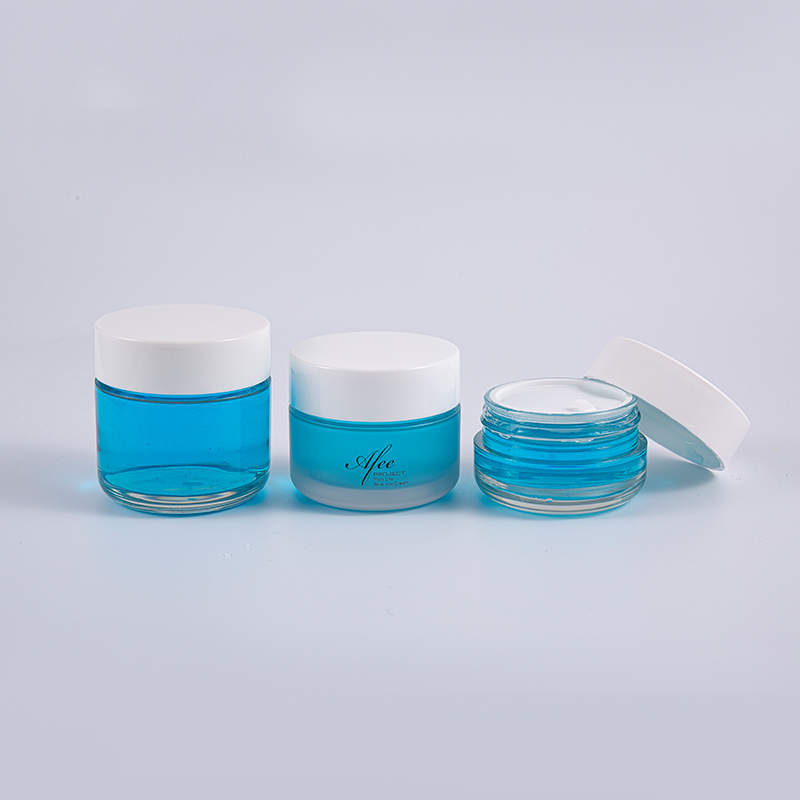 Transparent PETG 50g Thick-Wall Cream Jar with White Screw CapA clear thick-wall PETG cream jar in 50g, shown with a white screw cap for cosmetic packaging buyers comparing material and fill options.View Product →
Translate Fill Weight Into Capacity
The number printed on a jar is nominal, not literal. A 50g jar holding a dense cream at roughly 1.0 g/ml will often run close to full, while a whipped butter at 0.85 g/ml leaves visible headspace that customers read as "half empty". Work out fill weight from density first, then leave five to ten percent headspace so the lid does not press into the product and so the jar survives temperature swings in transit.
A rough map that covers most briefs: 10–15g for samples, lip and eye products; 30g for travel sizes and eye creams; 50g as the standard face cream; 80–100g for treatment creams and body products; 120g and above for value or professional sizes.
Mouth diameter matters as much as volume. Below roughly 45mm, fingers struggle to reach the product; above 65mm the jar starts to feel like a tub and the lid becomes a handling issue. Measure the opening against the way people will actually use the product, not just against the net weight on the label.
Transparent PETG 80g Thick-Wall Cream Jar with White Screw CapA crystal-clear PETG cream jar in 80g with a white screw cap, suited to skincare packaging where jar opening and closure fit matter.View Product →Get the Neck, Thread and Closure Right
Most jar complaints that reach a customer service inbox are closure complaints: a lid that loosens in a carton, a seam that weeps, a cap that cracks when over-tightened. The neck finish decides all of it.
A single-start thread is simple and cheap but slow to open; a double-start thread halves the turns and feels more considered in the hand. Disc caps and dome caps give a wide, flat top that takes decoration well. Whatever you select, decide on the liner early: a PE foam liner for general sealing, EPE for a softer compression, or an induction foil seal when tamper evidence is required by the market.
- Specify an application torque range, not a single number, so the filling line has room to work.
- Ask for a leak test with the jar inverted for 24 hours at 40 °C, plus a vibration and drop test on the shipper.
- Check thread engagement after ten open-and-close cycles; a tired thread is the first sign of a cheap tool.
Decide How Much Wall You Are Paying For
Wall thickness is where a jar stops being a container and becomes a brand asset. A thin wall saves material and freight; a thick wall, with a weighted base and a lid that closes with a soft thud, reads as premium before anyone opens the product. The trade-off is real: thick PETG needs slower cooling in the mold, weighs more in every carton, and can sit awkwardly with a lightweighting claim on the same page.
Our usual advice is to spend the thickness where the customer touches it — the shoulder and the lid — and keep the base sensible. If the budget cannot stretch to a solid wall, a double-wall construction gets a similar impression with less material.
Plan the Decoration Before the Tooling
Frosting, spray coating, silk screening, hot stamping, labeling and color matching all interact with the material you just chose. Frosting hides fingerprints and small scratches; a crystal-clear wall shows every one of them. A spray coating can add a soft-touch feel but may complicate recycling. A full-wrap label on a curved shoulder needs a curved-surface artwork check, which is far cheaper to do before the print run than after.
Set the decoration plan and the color standard at the same time as the mold drawing. Changing a finish after tooling is approved is the most common reason a launch date slips by three weeks.
Weigh Sustainability and Refill Options
Jars are heavy compared with tubes and bottles, so environmental scrutiny lands here first. The practical routes are mono-material construction that a recycler can actually process, a sensible share of post-consumer resin, and refill or replaceable-inner designs that keep the outer shell in use.
Inner-bag vacuum jars sit somewhere between a jar and an airless bottle: the product is dispensed by a pump from a collapsible bag, so the formula meets less air and the outer wall can be reused. For active creams and anything oxygen-sensitive, it is worth the conversation.
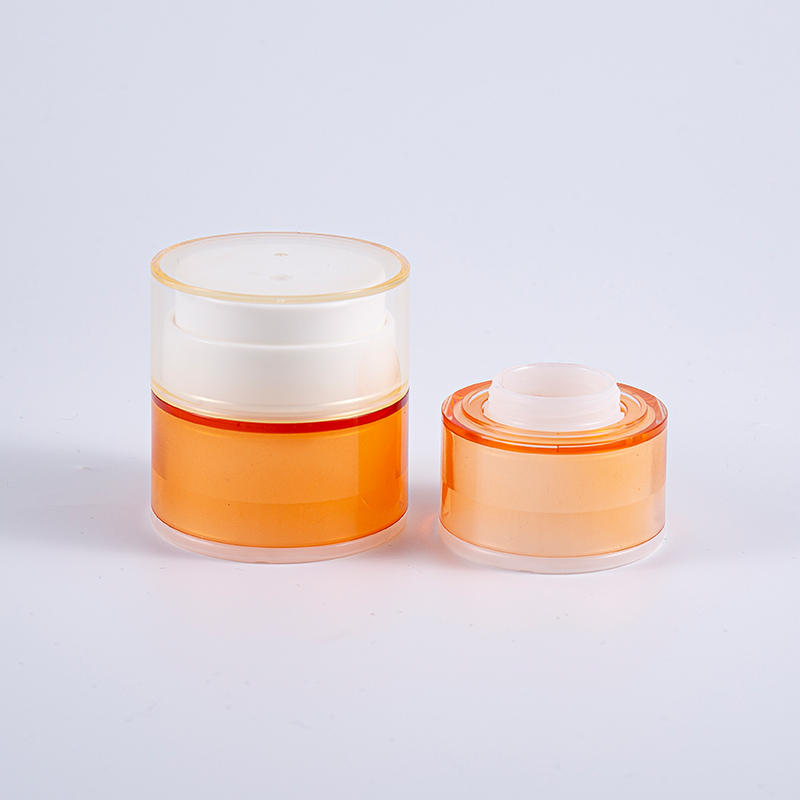 Refillable 50ml Inner Valve Bag Vacuum Cream JarA refillable 50ml vacuum cream jar with inner valve bag dispensing, designed to limit air contact for creams and portable skincare packaging.View Product →
Sample, Test, Then Commit to a Supplier
Once the shape, material and closure are shortlisted, the work shifts to verification. A short sequence keeps surprises out of the launch:
- Request stock samples in the nearest size and fill them with your actual formula, not water.
- Run compatibility storage at 25 °C, 40 °C and, where relevant, 50 °C for four weeks, plus freeze-thaw cycling.
- Inspect for weight loss, panel deformation, color shift, thread stress marks and liner staining.
- Leak, drop and carton tests on the filled, packed unit — not on an empty jar.
- Confirm tooling ownership, MOQ, sample lead time, production lead time and the AQL you will accept.
- Visit or audit the facility if volume justifies it, and look at the sample room, the lab and the warehouse, not only the showroom.
Good suppliers will push back on a brief they think will fail in the field. That is a better sign than a supplier who agrees with everything.
Choosing a jar for a lotion or cream is rarely about finding the prettiest shape. It is about a formula, a fill line, a lid and a customer's hand agreeing with each other for a year. Get the material, capacity, closure and wall settled in that order, test with real product, and most of the risk disappears before the first production run. If you are still at the shortlist stage, our thick-wall cream jar range is a reasonable place to start comparing sizes and finishes, and we are always happy to send samples so you can feel the difference rather than read about it.
PREV:How to Make Makeup Containers: A Practical Guide from Design to ProductionNEXT:How to Choose the Right Plastic Bottle for Skincare: A Practical Guide
Interested in cooperation or have questions?
Subscribe to us and
get the latest updates.
get the latest updates.
Stay In Touch

Product Links
Contact Us
-
Phone: +86-13567569350
-
Tel: +86-575-82575298
-
Email: [email protected]
-
Add: No. 5 Plant, Zhejiang Tengxin New Energy Industrial Park, Daoxu Street, Shangyu District, Shaoxing City, Zhejiang Province, China.
-
South Korean company: 태미코스
Tel: 010-5617-6888
Add: 서울특별시 금천구 가산동 60-46 더리즌밸리 801호
Copyright © Shaoxing Lizhi Plastic Products Co., Ltd.