


 English
 中文简体
中文简体 Français
How Are PET Bottles Made? A Complete Guide to PET Bottle Manufacturing Process
Content
Walk through any cosmetics factory and you will see the same quiet workhorse everywhere: the PET bottle. From facial toner and makeup remover to sunscreen and body lotion, polyethylene terephthalate has become one of the most trusted packaging materials in the beauty industry. But how are PET bottles actually made? As a manufacturer of cosmetic plastic bottles, we live this process every day. In this guide, we will follow a PET bottle from raw resin to finished, shelf-ready packaging and explain why every step matters.
What Is PET and Why Is It So Widely Used?
PET, or polyethylene terephthalate, is a thermoplastic polyester produced by polymerizing terephthalic acid and ethylene glycol. The resulting resin is highly transparent, mechanically strong, lightweight, and recyclable, which makes it the default choice for everything from drinking water bottles to premium cosmetics packaging.
PET's popularity in cosmetics is no accident. It offers glass-like clarity at a fraction of the weight, resists shattering during transport, and provides a dependable barrier against oxygen and moisture. Different resin families suit different products, however, so it is worth knowing how PET compares with its close relatives.
| Material | Clarity | Oxygen Barrier | Flexibility | Typical Uses |
|---|---|---|---|---|
| PET | High | Good | Rigid | Toner, makeup remover, cleansing bottles |
| PETG | High | Moderate | Rigid | Thick-wall lotion bottles, cream jars |
| PE | Low to medium | Moderate | Flexible | Body wash, shampoo, sunscreen |
| PP | Medium, hazy | Moderate | Semi-rigid | Multilayer lotion bottles, caps |
For a deeper comparison of two of these resins, our guide to PET vs. PP in cosmetic plastic bottles walks through the practical differences in clarity, chemical resistance, and cost.
How PET Bottles Are Made: Step by Step
Step 1: Producing PET Resin
PET production begins with the polymerization of ethylene glycol and terephthalic acid at high temperature and under vacuum. The molten polymer is extruded into strands, cooled, and cut into uniform pellets. These pellets are then shipped to bottle manufacturers around the world.
Step 2: Drying the Pellets
PET is hygroscopic, which means it eagerly absorbs moisture from the air. If even a small amount of water enters the melting process, it degrades the polymer chains and produces cloudy or brittle bottles. In our workshop, the first mandatory step is drying the PET pellets in dehumidifying hoppers until their moisture content drops below the required threshold, typically around 50 parts per million.
Step 3: Injection Moulding the Preforms
The dried pellets are melted and injected at high pressure into a preform mould. The result is a preform: a small, test-tube-shaped piece of plastic with a finished bottle neck and thread already formed at the top. The neck is the most critical part of the future bottle because every cap, pump, and sprayer must fit it with precision. Any variation here directly affects sealing performance.
Step 4: Stretch Blow Moulding
The preform is then reheated and transferred into a blow mould. Inside the mould, a stretch rod pushes the preform lengthwise while compressed air inflates it against the cooled cavity. This biaxial orientation aligns the polymer chains in two directions and gives PET bottles their signature strength, clarity, and gas barrier. The mould geometry and blowing parameters determine wall thickness distribution and the final shape of the bottle.
Step 5: Cooling, Trimming, and Inspection
After blowing, bottles are cooled, removed from the mould, and passed through automated inspection. Systems check for leaks, flash, uneven wall thickness, thread defects, and surface blemishes. Statistical process control data lets us tune each machine and maintain consistent quality from batch to batch.
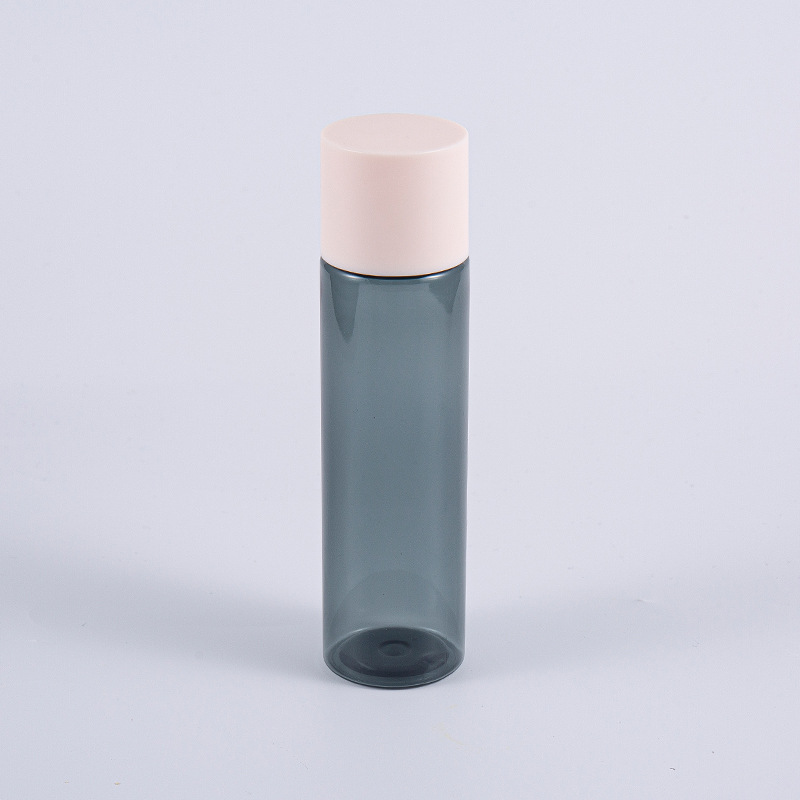 120ml PET Cosmetic Bottle with Screw Cap for Skincare and PharmaThis 120ml PET bottle is FDA-approved for food and pharmaceutical use and can be fitted with pumps, sprayers, or droppers. It appears after automated inspection and is ready for decorating, filling, and shipping.View Product →
A typical PET bottle from this line, such as a cosmetics-use 120 ml bottle with a screw cap, is ready to be decorated, filled, and shipped to the brand owner.
Three Blow Moulding Methods at a Glance
PET bottles are not all made with a single process. Depending on the shape, material, and production volume, manufacturers choose between three main blow moulding methods.
| Method | How It Works | Typical Applications |
|---|---|---|
| Injection Blow Moulding | Molten polymer is injected to form a preform, which is then blown into shape in the same machine | Small cosmetic bottles, pharmaceutical containers |
| Extrusion Blow Moulding | Melted plastic is extruded as a tube, clamped in a mould, and inflated with air | Flexible PE bottles for body wash, shampoo, and inverted bottles |
| Injection Stretch Blow Moulding | Preforms are injection-moulded first, then reheated and stretch-blown | The vast majority of PET beverage and cosmetic bottles |
For PET bottles, injection stretch blow moulding is the dominant technology because it combines design freedom with the strength benefits of biaxial orientation. This is the method described in our step-by-step guide above.
From Empty Bottle to Shelf-Ready Packaging
Once a PET bottle has been blown and inspected, it still needs a few finishing touches before it can carry your product.
Neck calibration ensures the thread is perfectly round and dimensionally accurate so that a pump or cap can be seated without leaking. Surface treatment, such as corona or flame treatment, raises the surface energy of the PET and improves the adhesion of inks, labels, and lacquers. After decoration, the bottle receives its closure.
The choice of closure depends on the product's viscosity and how consumers will use it. A thin toner usually works with a screw cap or sprayer; a rich body lotion calls for a pump; a cleansing foam needs a dispensing closure. Each closure must be tested with the bottle to guarantee a perfect seal.
What Makes a Quality PET Bottle for Cosmetics?
Not all PET bottles are created equal. In cosmetics, the bottle is part of the product experience. Customers judge a serum or lotion by the weight of the bottle, the clarity of the plastic, and the smoothness of the surface before they even open the cap.
Wall thickness is one of the most important quality indicators. If the walls are too thin, the bottle feels cheap and may deform under pump pressure. If they are too thick, it becomes heavy and expensive. A well-made PET bottle distributes material evenly, with no weak spots at the corners or shoulder.
For richer, thicker formulas, many brands move from PET to PETG, a glycol-modified close relative of PET. PETG can be moulded with substantially thicker walls and a glass-like surface, making it ideal for cream jars and premium lotion bottles.
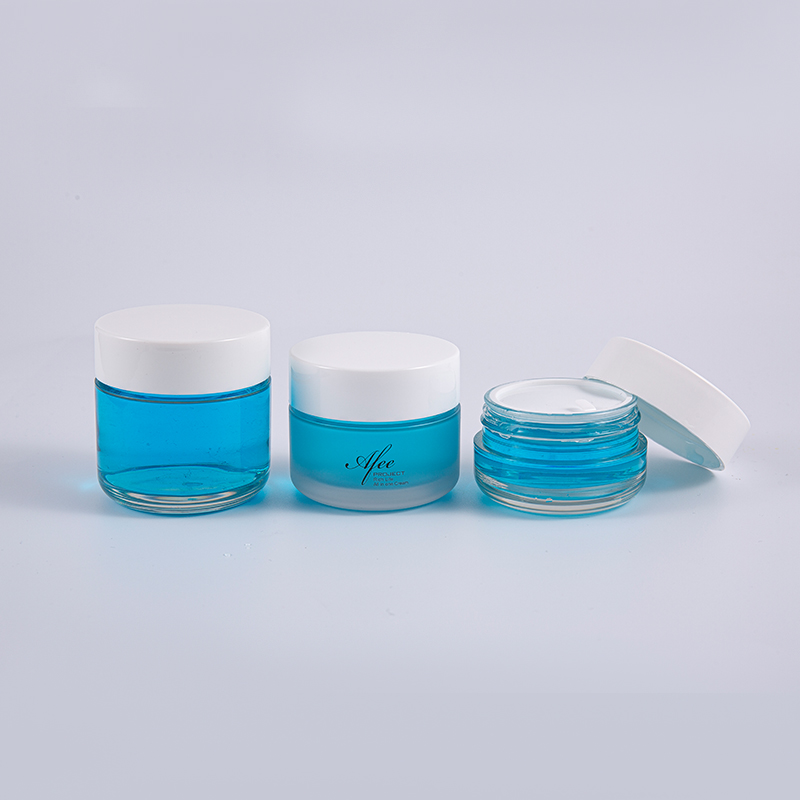 120g Transparent PETG Cream Jar with White Screw CapMade from PETG with thick walls and a glass-like surface, this 120g jar offers crystal clarity and durability. Ideal for premium creams, it combines a luxurious feel with lightweight, shatterproof construction.View Product →
A transparent thick-wall PETG cream jar, for example, gives a tangible feeling of luxury while remaining lightweight and shatterproof.
Finally, the bottle must match its closure perfectly. We test every PET bottle with its intended cap or pump before it leaves the factory. A bottle that fails the seal test is rejected, because leakage in the hands of the consumer is the fastest way to damage a brand.
Sustainability and the Future of PET
PET is already one of the most widely recycled plastics in the world. A large share of today's PET bottles is being converted back into rPET resin, which can be used to make new bottles without meaningful loss of clarity or strength. Recyclability is also one of the main reasons beauty brands continue to choose PET over other materials.
Manufacturers can also reduce waste from the start. Lightweighting, or making bottles with less material while maintaining strength, lowers the carbon footprint of every shipment. Choosing recyclable closures, such as aluminium caps instead of mixed plastics, further improves the recyclability of the finished package.
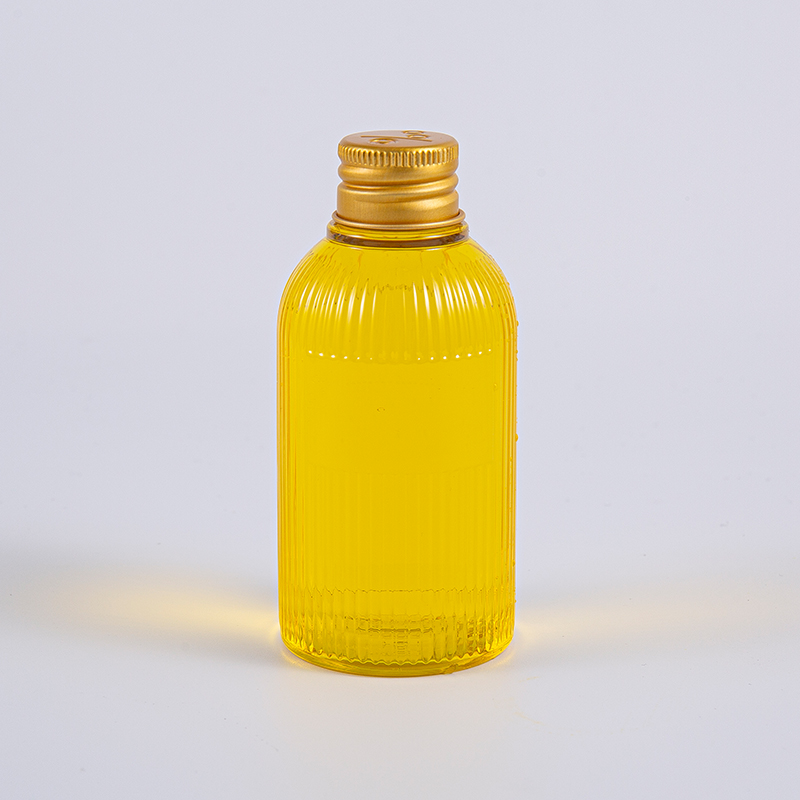 80ml Recyclable PET Bottle with Aluminium ClosureThis lightweight 80ml PET bottle uses a recyclable aluminium cap, avoiding mixed-plastic contamination. Its clarity showcases contents, and the design supports sustainable packaging while remaining durable and break-resistant.View Product →
An 80 ml PET bottle with an aluminium closure is a good example of a sustainable combination: the PET body is fully recyclable, and the aluminium cap can be recycled separately without contaminating the PET stream.
The journey of a PET bottle is a surprisingly complex story. Raw polymer pellets become crystal-clear preforms, and a few seconds of air pressure later, they take the shape of a bottle that carries toner, serum, or sunscreen to consumers around the world.
Choosing the right PET bottle for your product means understanding the manufacturing process, the material properties, and the finishing steps that turn a piece of plastic into a brand experience. If you are working on a new cosmetic formula and need a partner who understands PET manufacturing in depth, we would be happy to help. You can browse our bottle series.
PREV:No previous articleNEXT:how to get lotion out of bottle: Applications, Selection Criteria, and Practical Guidance
Interested in cooperation or have questions?
Subscribe to us and
get the latest updates.
get the latest updates.
Stay In Touch

Product Links
Contact Us
-
Phone: +86-13567569350
-
Tel: +86-575-82575298
-
Email: [email protected]
-
Add: No. 5 Plant, Zhejiang Tengxin New Energy Industrial Park, Daoxu Street, Shangyu District, Shaoxing City, Zhejiang Province, China.
Copyright © Shaoxing Lizhi Plastic Products Co., Ltd.