


 English
 中文简体
中文简体 Français
How Can We Make Plastic Bottles? A Manufacturer's Guide to Bottle Production
Content
Plastic bottles are so common that we rarely think about the engineering behind them. But for those of us who manufacture cosmetic and personal-care packaging, a plastic bottle is the product of a carefully controlled process: material selection, mold design, molding technology, finishing, and quality testing. When brand owners and product developers ask us "how can we make plastic bottles?", they usually want to understand the practical steps, the options available, and the trade-offs involved. This guide answers that question from the factory floor, so you can approach your next packaging project with confidence.
Start with the Right Resin
Every good bottle begins with the plastic resin. The material you choose must match your product's viscosity, filling temperature, and shelf-life requirements, as well as the way consumers will hold, squeeze, and store the bottle.
| Material | Key characteristics | Typical bottle applications |
|---|---|---|
| PE (HDPE/LDPE) | Tough, flexible, chemically resistant | Shampoo, body wash, conditioner, sunscreen |
| PP | Stiff, heat resistant, chemically inert | Lotions, creams, closures |
| PET | Crystal clarity, lightweight, recyclable | Toner, makeup remover, food and pharma use |
| PETG | Glass-like clarity, thick-wall capability | Serum bottles, thick-wall lotion bottles, jars |
| EVOH multilayer | Barrier layer against oxygen and moisture | Sunscreen, active skincare formulations |
Each resin behaves differently in the molding process. PE delivers the soft squeeze of a shampoo bottle, while PET gives the sparkling transparency of a toner bottle. PETG adds thickness and a premium, glass-like feel, and EVOH introduces a high-performance barrier layer. If you are deciding between two similar materials, our comparison of PET and PP cosmetic bottles explains the key trade-offs in more detail.
How Plastic Bottles Are Molded
Once the resin is chosen, the bottle takes shape with one of three core molding technologies. The right process depends on the bottle's shape, wall thickness, and production volume.
Extrusion Blow Molding
Extrusion blow molding is the workhorse of PE bottle production. The resin is melted into a hollow tube called a parison, which is captured inside a closed mold. Compressed air then inflates the parison against the mold walls, forming the bottle in seconds. It is fast, cost-effective, and ideal for simple round shapes, from 30ml travel bottles to 1000ml pump bottles for shampoo and body wash.
Injection Blow Molding and Injection Stretch Blow Molding
Injection blow molding starts with a molded preform that is heated and blown into the final bottle shape. Injection stretch blow molding takes the process a step further for PET: the preform is stretched and blown at the same time, aligning the polymer chains and producing thin, strong walls with excellent clarity and a precise neck finish. This is why toner and makeup remover bottles are usually made from PET.
Injection Molding for Thick-Wall Bottles and Closures
For parts that need density and precision, we use injection molding. Molten plastic is injected into a steel mold under high pressure, creating thick-wall PETG lotion bottles, cream jars, caps, pumps, and collars. Injection molded parts have a smooth surface, tight dimensional tolerances, and the substantial feel that premium brands want.
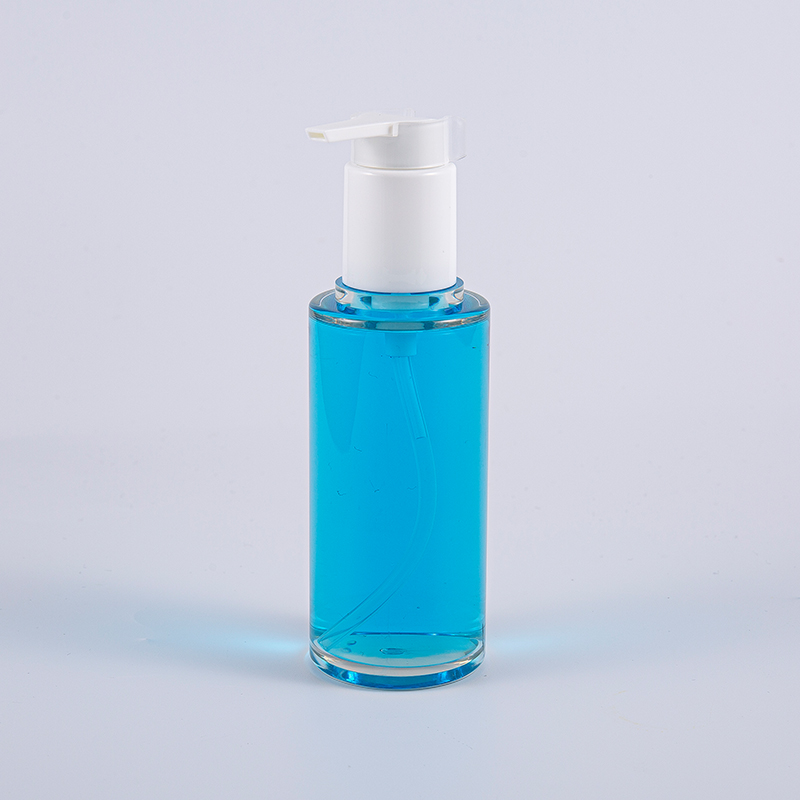 Clear PETG Round Lotion Bottle with PumpThis 100ml clear PETG bottle with a white pump offers a smooth, precise injection-molded finish, making it suitable for showcasing lotions or creams while maintaining dimensional accuracy and a premium feel.View Product →
Multilayer Structures and Barrier Protection
Some formulas are too sensitive for a single layer of plastic. Sunscreen filters, vitamin C, and fragrance-heavy products can degrade when exposed to oxygen, light, or moisture. Multilayer co-extrusion solves this by combining several polymer layers in one bottle wall.
EVOH Multilayer Bottles
In an EVOH multilayer bottle, a barrier layer of ethylene vinyl alcohol is sandwiched between outer and inner layers of PE or PP. The EVOH layer dramatically reduces oxygen and moisture transmission, keeping sunscreen actives effective and extending shelf life. The outer layer stays soft to the touch and easy to print, so protection does not come at the cost of the user experience.
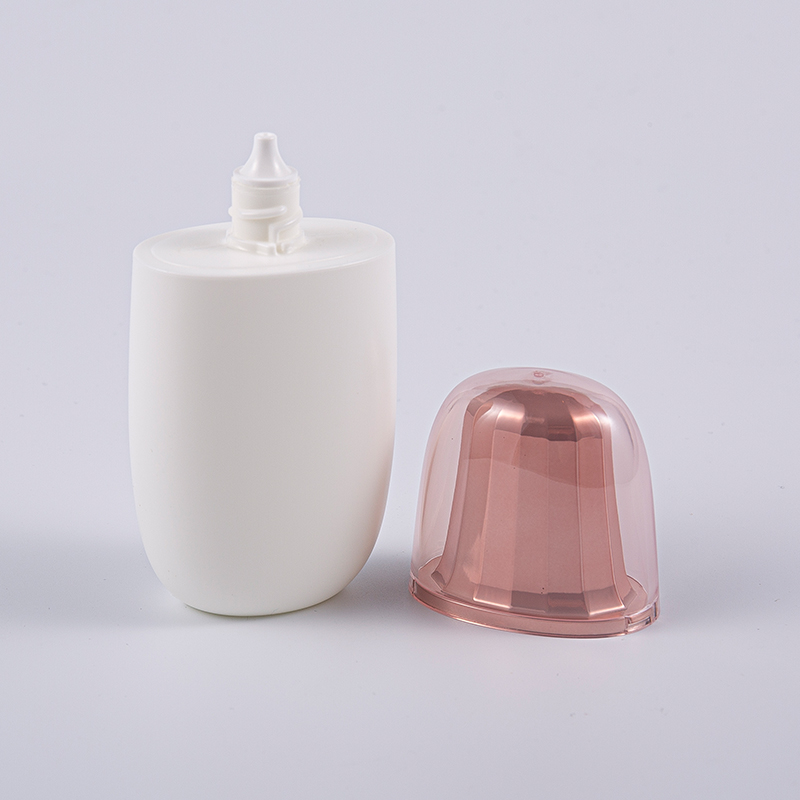 PE EVOH Multi-Layer Sunscreen BottleAvailable in 30ml and 50ml, this eco-friendly PE EVOH bottle uses a barrier layer to protect sunscreen actives from oxygen and moisture, with a pump for controlled dosing—ideal for travel and daily use.View Product →
Inner-Bag Vacuum Bottles
Inner-bag vacuum bottles take a different approach. A flexible multilayer bag sits inside the outer shell and collapses as the product is dispensed, so air never enters the container and nearly every drop of the formulation can be used. These airless systems are the standard choice for serums, essences, and cream-based products that need protection from oxidation and precise dosing.
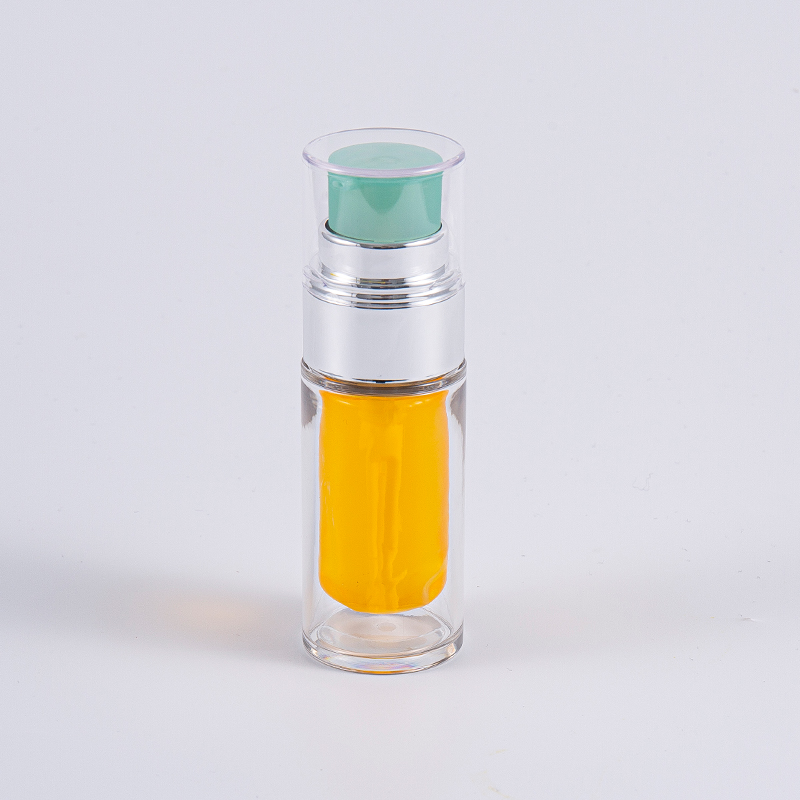 PETG Vacuum Bottle with Inner Bag and PumpFeaturing a multi-layer composite inner bag and vacuum pump, this 30ml/50ml bottle prevents air exposure, preserving sensitive formulations like serums and creams while ensuring accurate dispensing and extended shelf life.View Product →
Finishing, Assembly, and Decoration
Molding gives a bottle its shape, but the finishing steps make it ready for the shelf. The closure is selected according to the product's viscosity and how it will be used: flip-top caps for conditioners, screw caps for toners, lotion pumps for body lotion and creams, sprayers for facial mist, and droppers for serums. Pumps are inserted, caps are applied at the correct torque, and every bottle is checked to ensure the closure seals properly. Threads and neck finishes are especially important here, because a cap that leaks or crosses will quickly destroy a consumer's trust in the product.
Decoration is where packaging becomes part of the brand. Silk-screen printing adds logos and ingredient information directly on the container, while colored resins, pearlescent finishes, matte textures, and soft-touch coatings give the bottle a distinctive feel. Even a simple round bottle can look completely different when the finish, color, and closure are chosen well.
Quality Control and Testing
Quality control runs through every stage, from the incoming resin pellets to the finished bottles on the pallet. Dimensional accuracy, wall-thickness distribution, and neck finish tolerance are checked, because a bottle that looks fine but jams the filling line is a costly problem. Production samples are tested for leaks under pressure, drop impact resistance, closure torque, and compatibility with the customer's formula. For barrier bottles, oxygen transmission is verified to confirm the structure delivers the protection it promises.
We also inspect for visual defects such as flow marks, air bubbles, and uneven color. Appearance flaws can be just as damaging to a brand as functional failures, so both sides of the bottle receive the same attention.
Making Plastic Bottles Greener
Sustainability decisions are made in the design stage. Lightweighting reduces the amount of resin used without sacrificing strength, and mono-material constructions, such as a full PE or full PET bottle, are easier to recycle than mixed structures. Lightweight bottles also reduce transport emissions, since smaller, lighter containers fit more product into every shipment. Many of our customers choose recyclable resins, refillable vacuum systems, or small travel formats to reduce waste. The best approach is to define your sustainability goals early, then select the material and structure that meet both your environmental targets and your product's protection needs.
How to Work with a Plastic Bottle Manufacturer
You now know the main steps: resin selection, molding, multilayer engineering, finishing, and testing. The fastest way to turn that knowledge into real packaging is to share your product details with the manufacturer. Tell us the formula viscosity, fill volume, target price, and the visual style you want, and we will recommend the bottle series, closure options, decoration methods, and, if necessary, a custom mold development plan.
Our team is built on quick sampling, honest recommendations, and clear communication throughout the project. Whether you need a simple round PE bottle or a complete multilayer vacuum solution, the journey follows the same path:
- Define the brief: product type, fill volume, viscosity, and target price.
- Select the material and structure.
- Confirm samples before mass production.
- Run mass production and final quality checks.
You can learn more about our capabilities on our company overview page, or simply start the conversation with your latest product idea.
Plastic bottles are among the most engineered objects we use every day. Now that you know how they are made, you can approach your next packaging project with a clearer sense of the options, the trade-offs, and the possibilities. If you are ready to make your bottle, tell us what you plan to fill; we will take you through every step of the way.
PREV:No previous articleNEXT:How Are PET Bottles Made? A Complete Guide to PET Bottle Manufacturing Process
Interested in cooperation or have questions?
Subscribe to us and
get the latest updates.
get the latest updates.
Stay In Touch

Product Links
Contact Us
-
Phone: +86-13567569350
-
Tel: +86-575-82575298
-
Email: [email protected]
-
Add: No. 5 Plant, Zhejiang Tengxin New Energy Industrial Park, Daoxu Street, Shangyu District, Shaoxing City, Zhejiang Province, China.
Copyright © Shaoxing Lizhi Plastic Products Co., Ltd.