


 English
 中文简体
中文简体 Français
How to Choose Plastic Cream Jars for Cosmetic Packaging: A Complete Guide
Content
- 1 Why Plastic Cream Jars Are the Default Choice for Most Skincare Brands
- 2 Material Selection: Why PETG Leads for Cream Jars
- 3 Wall Thickness, Weight, and the Premium Impression
- 4 Choosing the Right Capacity
- 5 Closures, Seals, and Everyday Usability
- 6 Checking Formula Compatibility Before Production
- 7 How to Evaluate a Cosmetic Cream Jar Supplier
- 8 Final Thoughts on Sourcing Plastic Cream Jars
A skincare brand has just finished developing a night cream. The texture is right, the stability data look good, and the first production batch is scheduled. Then comes a question that can stall the launch: which cream jar should hold it?
Choosing a cosmetic cream jar often feels like a small decision next to months of formulation work, but it is one of the most consequential packaging choices a brand makes. The jar protects a carefully balanced emulsion, shapes how the product feels in the consumer's hand, and carries the brand name into a daily routine. This guide covers the factors that matter when selecting a plastic cream jar, with practical guidance for product developers, brand managers, and procurement teams.
Why Plastic Cream Jars Are the Default Choice for Most Skincare Brands
Glass jars carry a premium reputation, but plastic cream jars dominate everyday skincare packaging for practical reasons. They are lighter, which lowers shipping costs and reduces breakage risk in transit and in the bathroom. They are safer to handle, especially in sizes above 50g. And they can be molded into a wider range of shapes and finishes than glass at a comparable cost.
Plastic cream jars also handle modern decoration methods well. Silk screening, hot stamping, and in-mold labeling all perform reliably on round or tapered jar bodies. The result is a packaging format that serves the consumer functionally and supports the brand's visual identity at the same time.
Material Selection: Why PETG Leads for Cream Jars
Not all plastics behave the same way in a cream jar. PE and PP are common in squeeze bottles, but they lack the clarity and rigidity that make a jar feel substantial. PETG, or glycol-modified polyethylene terephthalate, offers the closest visual match to glass while keeping the weight and impact resistance of plastic. It does not shatter when dropped, it holds thread tolerances well, and its surface accepts a variety of finishing techniques.
PETG also shows good compatibility with most cosmetic formulations. It resists the oils, emulsifiers, and fragrance components found in typical creams, and its low gas permeability slows oxygen ingress, which helps preserve antioxidants and natural extracts. Because PETG is recyclable in many markets, it fits the sustainability messaging that most skincare brands now communicate to their customers.
A practical example of this material in daily use is the 50g transparent round PETG thick-wall cream jar with white screw cap, which pairs PETG's clarity with a wall thickness that feels noticeably more substantial than a standard thin-wall jar.
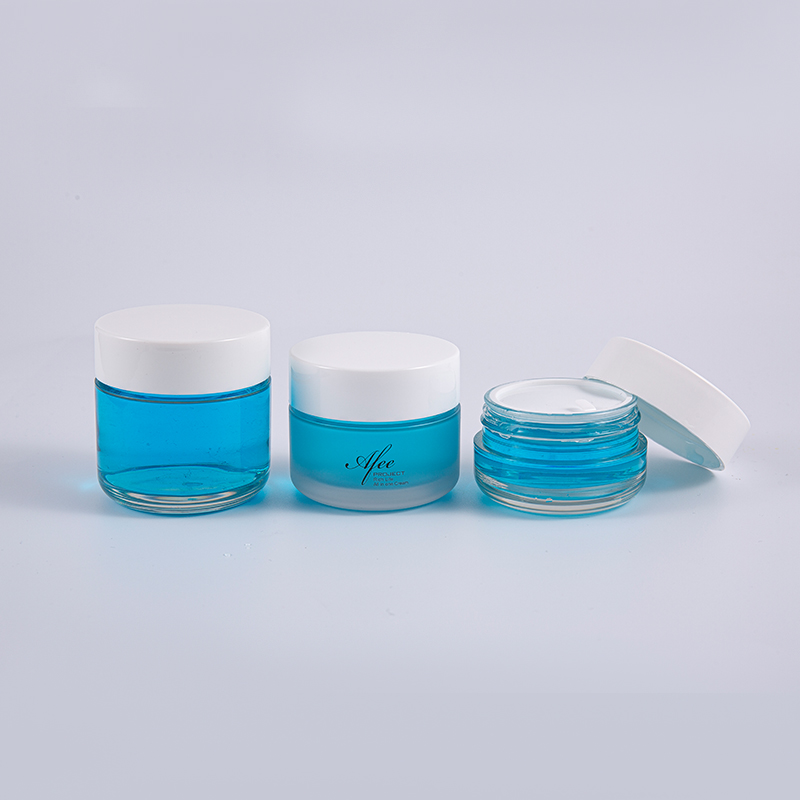 Wholesale Transparent Round Shape PETG 50g Thick Wall Cream Jar With White ScrewShaoxing Lizhi Plastic Products Co., Ltd is China wholesale Transparent Round Shape PETG 50g Thick Wall Cream Jar With White Screw Cap su...View Product →
Wall Thickness, Weight, and the Premium Impression
"Thick wall" is one of the most frequently requested specifications in cream jar sourcing, and it is not just a marketing term. Wall thickness in plastic cream jars typically ranges from about 1.2 mm in lightweight designs to more than 3 mm in heavy-duty formats, and the difference is visible and tangible.
Thicker walls deliver four practical benefits:
- They resist deformation when a jar is squeezed, dropped, or stacked in shipping.
- They add weight, which consumers often associate with richer, higher-value products.
- They improve the oxygen barrier slightly, since gas must travel through more material.
- They create a more stable surface for decoration and reduce the risk of read-through when the jar is filled.
A practical guideline: for a daily-use face cream, a wall thickness around 2 mm is usually sufficient. For a night cream or a prestige product that needs to feel substantial, ask for 3 mm or more. When you receive samples, weigh jars of the same capacity. The difference between a thin-wall and a thick-wall jar is often striking, and that difference becomes part of the perceived value that consumers notice at the shelf.
Choosing the Right Capacity
Cream jar capacity should match the product's usage pattern, not just the formula's volume in milliliters. The table below shows the capacity bands most common in skincare packaging and the applications they fit best.
| Capacity | Typical Application | Estimated Duration of Use |
|---|---|---|
| 10g | Samples, trial sizes, gift sets | 1–2 weeks of daily facial use |
| 50g | Daily face cream, eye cream | 4–8 weeks |
| 80g | Night cream, rich moisturizer | 6–10 weeks |
| 120g | Body cream, hand cream | 4–8 weeks of full-body use |
One detail is easy to miss when selecting capacity: cream density varies. A 50g net-weight product does not always require a 50g fill-volume jar. Check the formula's density, calculate the required fill volume in milliliters, and add a safety margin for fill tolerances and stability testing.
For a product positioned between a daily cream and a rich treatment, the 80g transparent round PETG thick-wall cream jar with white screw cap offers enough capacity for a substantial night cream while keeping a footprint that sits comfortably in the hand.
Wholesale Transparent Round Shape PETG 80g Thick Wall Cream Jar With White ScrewShaoxing Lizhi Plastic Products Co., Ltd is China wholesale Transparent Round Shape PETG 80g Thick Wall Cream Jar With White Screw Cap su...View Product →Closures, Seals, and Everyday Usability
The closure is the second half of the packaging system, and it deserves as much attention as the jar body. Most plastic cream jars use a screw cap with a continuous thread. The cap's inner liner, whether a foil seal, a plastic disc, or an integrated liner, determines how well the jar resists evaporation, leakage, and oxygen ingress.
Torque also matters. A cap that is too hard to open frustrates users, especially older consumers or anyone with limited hand strength. A cap that is too loose can back off during shipping and cause leakage. A reliable supplier should provide torque specifications and help you select a liner material suited to your formula's oil content and viscosity.
For brands positioning a product at a higher price point, the jar body and cap together create the first tactile impression. A thicker body paired with a smooth, well-finished cap feels deliberate and premium. In larger formats, closure usability is even more critical because the jar is often gripped with the whole hand. The 120g transparent round PETG thick-wall cream jar with white screw cap is a typical size for body creams and illustrates why thread consistency and liner quality matter as the diameter grows.
Wholesale Transparent round shape PETG 120g Thick Wall Cream Jar With White ScreShaoxing Lizhi Plastic Products Co., Ltd is China wholesale Transparent round shape PETG 120g Thick Wall Cream Jar With White Screw Cap s...View Product →Checking Formula Compatibility Before Production
Not every plastic is compatible with every cream formula. Before ordering a full production run, verify the following points:
- Oil and solvent resistance. High-oil creams can interact with certain plastics. PETG resists most cosmetic oils, but strong essential oils and some solvents can cause stress cracking. A 30-day fill test with your actual formula is the most reliable way to confirm compatibility.
- Fragrance migration. Strong fragrances can permeate certain plastics and alter the scent over time. Run a permeation test with your final fragrance to confirm the scent profile holds.
- UV and light exposure. Transparent PETG does not block UV light. If your formula contains UV-sensitive active ingredients, consider an opaque jar, a secondary carton, or an inner-bag system.
- Hot-fill tolerance. If the cream is filled at an elevated temperature, confirm the material's heat deflection limit. PETG generally handles hot-fill temperatures below 60°C, but the supplier should verify the specific grade.
For a closer look at when a cream jar is the right format compared with other cosmetic jars, see our cream jar vs cosmetic jar packaging guide.
How to Evaluate a Cosmetic Cream Jar Supplier
The supplier's capabilities determine how smoothly your packaging project runs. A few evaluation points stand out.
First, specialization matters. A general plastic container manufacturer may not understand the tolerances required for cream jar threads, seal faces, and thick-wall molding. Look for a supplier with a dedicated cosmetic packaging line.
Second, check wall thickness consistency. Thick-wall PETG jars are harder to mold than thin-wall bottles. Inconsistent wall thickness can appear as cloudy patches, uneven color, or residual stress that leads to cracking later.
Third, confirm the supplier can handle the full workflow: material selection, mold design, sampling, decoration, and quality inspection. A single partner managing the process end to end saves time and reduces communication errors.
Fourth, ask about sampling speed. A supplier who can ship samples within days rather than weeks lets your team run fill tests and consumer research while the project is still moving.
The user-experience side of plastic cream jars is explored in more detail in our article on how plastic cream jars improve the user experience of skincare products, which complements the technical guidance here.
Final Thoughts on Sourcing Plastic Cream Jars
A plastic cream jar is not the most expensive component in a skincare launch, but it is one of the most visible and one of the hardest to change after production starts. Taking the time to verify material performance, wall thickness, capacity, closure, and supplier capability before ordering saves money and prevents a costly package redesign.
The right plastic cream jar protects the formula, feels right in the consumer's hand, and reinforces the brand with every use. The wrong one introduces stability problems, user complaints, and supply-chain delays. With the guidance above, your team can approach the selection process with clear criteria and a realistic timeline, and the focus stays where it belongs: a product that consumers look forward to using every day.
PREV:PET Plastic Bottle Guide: Choosing Cosmetic Plastic Bottles for Your BrandNEXT:Thick Wall PET & PETG Lotion Bottles: Materials, Thickness, and Supplier Tips
Interested in cooperation or have questions?
Subscribe to us and
get the latest updates.
get the latest updates.
Stay In Touch

Product Links
Contact Us
-
Phone: +86-13567569350
-
Tel: +86-575-82575298
-
Email: [email protected]
-
Add: No. 5 Plant, Zhejiang Tengxin New Energy Industrial Park, Daoxu Street, Shangyu District, Shaoxing City, Zhejiang Province, China.
-
South Korean company: 태미코스
Tel: 010-5617-6888
Add: 서울특별시 금천구 가산동 60-46 더리즌밸리 801호
Copyright © Shaoxing Lizhi Plastic Products Co., Ltd.