


 English
 中文简体
中文简体 Français
PET Plastic Bottle Guide: Choosing Cosmetic Plastic Bottles for Your Brand
Content
Your product development team has settled on a formula for a new facial toner, and now the bottle sits in your hands as the next decision. It needs to handle alcohol, look clean and transparent on the shelf, survive shipping without damage, and fit a cost structure that works for a high-volume consumer product. For most liquid cosmetics, the PET plastic bottle is the first option worth evaluating, and for most projects, it is the right one. PET is clear, chemically stable, lightweight, and recyclable, which is why it remains the default material for cosmetic plastic bottles. The practical question is when to stay with PET and when to switch to PETG, PE, or a multilayer structure.
Why PET is the default material for cosmetic plastic bottles
PET earns its position in cosmetics packaging because of a combination of qualities that no other single plastic matches.
Chemical resistance. PET resists interaction with the majority of cosmetic formulations. Alcohol-based toners, water-based cleansers, and oil-in-water emulsions can be stored in PET without the bottle degrading or the formula changing. That is a critical safety point, because a reactive package can alter the colour, smell, or stability of the product inside.
Clarity. PET is highly transparent, which lets the natural colour of the formula show through. Consumers read that clarity as freshness and quality, especially for toner, micellar water, and makeup remover.
Light weight and impact resistance. A PET bottle is far lighter than glass and will not shatter when dropped. For brands selling through e-commerce, that means lower shipping costs, fewer damaged returns, and a safer experience for the customer at home.
Recyclability. PET is among the most widely recycled plastics. Choosing PET does not automatically make a package sustainable, but it gives your brand a realistic starting point for a container that can be collected and recycled rather than landfilled.
PET vs PETG vs PE vs PP: how the materials compare
A PET bottle is rarely the wrong answer for a liquid cosmetic, but it is not always the best answer. PETG, PE, and PP each offer a different balance of clarity, flexibility, and cost. The right choice depends on the viscosity of the formula, the dosing method, and the feeling the brand wants the customer to have in their hand.
| Material | Typical applications | Key strengths | Limitations |
|---|---|---|---|
| PET | Toners, makeup removers, facial cleansers | Clarity, chemical resistance, recyclability, cost efficiency | Limited flexibility; not the best choice for thick pastes |
| PETG | Premium lotions, thick-wall bottles, cream jars | Deeper clarity, thicker walls, better impact resistance | Higher cost than standard PET |
| PE | Shampoo, body wash, conditioner, inverted bottles | Squeezable, durable, soft-touch surfaces | Translucent or opaque; lower clarity than PET |
| PP | Creams, lotions, some pharmaceutical containers | Chemical resistance, heat tolerance, matte finishes | Less transparent; different surface feel |
Water-thin formulas such as toner and micellar water suit PET naturally. Rich body lotions that need a squeezable bottle usually work better in PE. Serums and face creams that require a heavy, premium feel call for PETG with a thick wall. If you are choosing between two chemically similar materials, a direct comparison of PET and PP cosmetic bottles can help settle the question.
What to check before sourcing a cosmetic plastic bottle
Material is only half of the decision. The best PET bottle will still fail if it does not match your formula, your closure, or your filling line. Walk through these four points before committing to a supplier.
Formula compatibility
Most standard cosmetics sit comfortably in PET. Oxygen-sensitive actives, high concentrations of essential oils, and formulations that require a long shelf life may demand more than a single-layer bottle. In those cases, EVOH multilayer bottles or inner-bag vacuum bottles provide the needed barrier performance.
Closure and dispensing system
A bottle is only as good as its neck finish. Screw caps, pumps, sprayers, and flip-top caps all require specific neck dimensions. Decide how the consumer will dose the product, whether by pouring, pumping, or spraying, before locking in the bottle design.
Capacity and dimensions
Your range will probably need a travel size and a full-size version, and the two should share a visual identity. Check that the supplier can produce the same design in 50ml, 120ml, 200ml, or larger without changing the proportions and the look.
Decoration and customization
PET is easy to work with. It can be moulded in different colours, frosted, silk-screen printed, or combined with aluminium or plastic closures. Ask about minimum order quantities for each decoration option early, because that often decides how flexible PET can be for a smaller brand.
Use a quick checklist when comparing supplier samples:
- Confirm that the material is compatible with the formula's pH, alcohol content, and UV sensitivity.
- Match the neck finish to the chosen closure before ordering full samples.
- Plan a capacity range that covers both travel and full sizes from the start.
- Request decoration samples and confirm minimum order quantities for each option.
Matching the bottle to the product
Once the material and closure logic are settled, the bottle shape carries the brand's visual message. The product type should drive the shape choice.
Toners, cleansers, and makeup removers
Makeup remover is a good example. The formula is usually a water-based or oil-based liquid, so a clear PET round bottle fits both the product and the consumer's expectation. A 120ml round PET makeup remover bottle gives the formula the clarity and chemical resistance it needs, and the same shape can later be offered with different closures as the range grows.
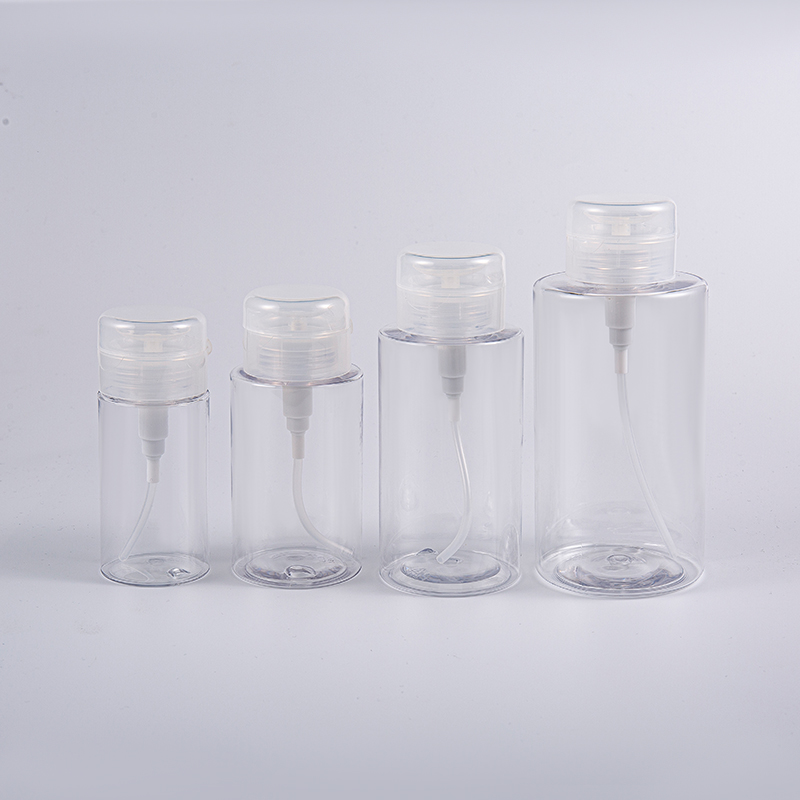 Wholesale 120ml Makeup Remover Bottles Suppliers, Factory - Shaoxing Lizhi PlastShaoxing Lizhi Plastic Products Co., Ltd is China wholesale 120ml Makeup Remover Bottles suppliers and factory, details:Product Name:Tran...View Product →
For brands that prefer the simplest possible pack, a single bottle and a screw cap, a 120ml PET cosmetic bottle with screw cap is a low-risk starting point for toner, cleansing water, and liquid soap, and it still leaves room for a pump or sprayer in a future version.
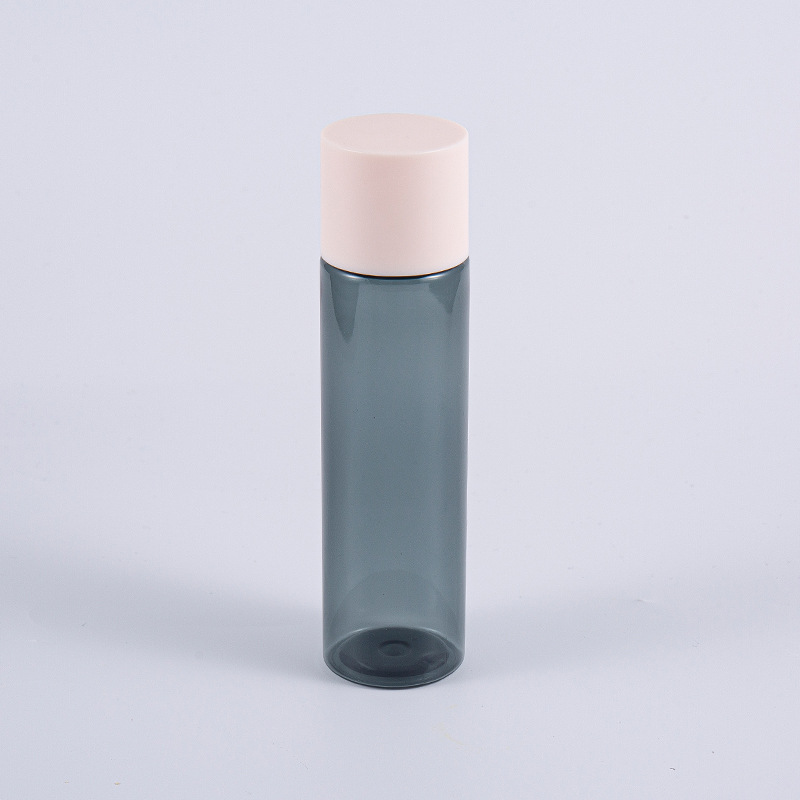 Wholesale Cosmetics Use 120ml PET Plastic Bottle With Screw Cap Suppliers, FactoShaoxing Lizhi Plastic Products Co., Ltd is China wholesale Cosmetics Use 120ml PET Plastic Bottle With Screw Cap suppliers and factory, ...View Product →
When the formula is a serum, a facial oil, or a moisturizer and the brand wants the packaging to feel substantial, standard PET starts to feel too light. PETG with a thick wall adds weight and depth. A 30ml to 100ml PETG thick-walled lotion bottle with pump head covers exactly this situation: a compact size, a clean pump, and a wall thickness that signals a premium product.
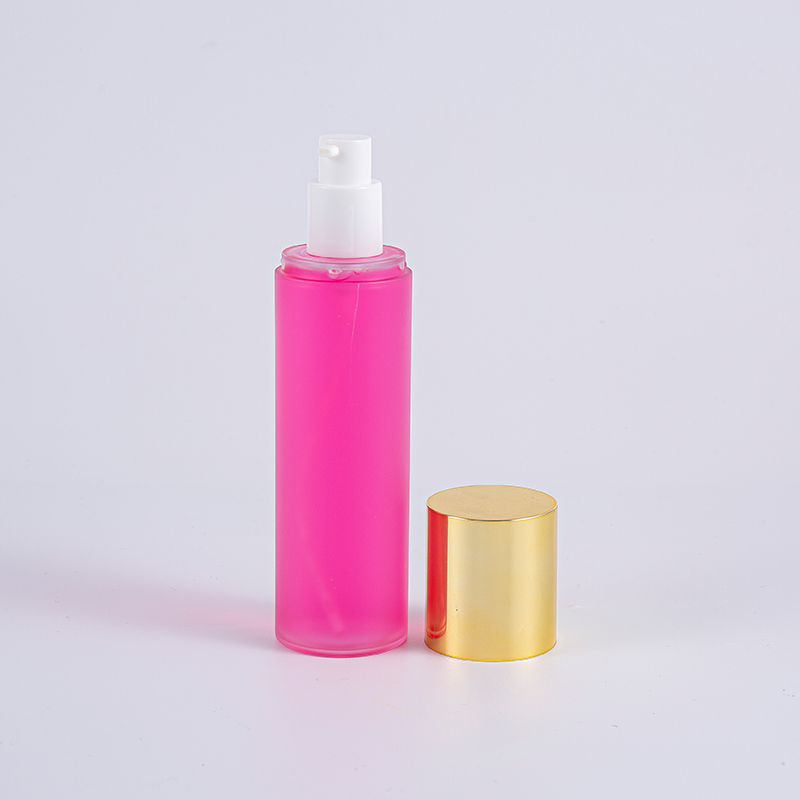 Wholesale 30ml 100ml PETG Thick-Walled Lotion Bottle with pump Head Suppliers, FShaoxing Lizhi Plastic Products Co., Ltd is China wholesale 30ml 100ml PETG Thick-Walled Lotion Bottle with pump Head suppliers and facto...View Product →
Sustainability and long-term sourcing
PET's recyclability is a genuine advantage, but it comes with responsibility. The lighter the bottle, the fewer resources are used in production and transport. Some manufacturers now offer recycled PET material or design bottles with easily separable components to simplify recycling. When comparing suppliers, ask how the bottles are manufactured, whether production waste is recycled, and whether the bottle can be recycled after use. These questions matter more to buyers and regulators every year, and they also give your brand a credible story to tell at the point of sale.
A capable manufacturer should also help you evaluate material options, provide samples quickly, and adjust the design to fit your filling line. That kind of early collaboration reduces the risk of discovering a compatibility problem after the first production run.
Making the final call
Start with PET for water-thin cosmetics where clarity, chemical resistance, and cost matter most. Move to PETG when the product needs a thick-wall, premium feel. Use PE for squeezable, soft-touch body care, and consider EVOH or vacuum structures when the formula demands a high barrier. Discuss the options with your supplier early, request physical samples, and test the bottle with your actual formula and closure before scaling up. The right cosmetic plastic bottle is the one that protects the product, fits the brand, and works on your filling line, and PET remains the most reliable place to start.
PREV:Body Lotion Plastic Bottle Guide: Materials, Pumps, Sizes, and Sourcing TipsNEXT:How to Choose Plastic Cream Jars for Cosmetic Packaging: A Complete Guide
Interested in cooperation or have questions?
Subscribe to us and
get the latest updates.
get the latest updates.
Stay In Touch

Product Links
Contact Us
-
Phone: +86-13567569350
-
Tel: +86-575-82575298
-
Email: [email protected]
-
Add: No. 5 Plant, Zhejiang Tengxin New Energy Industrial Park, Daoxu Street, Shangyu District, Shaoxing City, Zhejiang Province, China.
-
South Korean company: 태미코스
Tel: 010-5617-6888
Add: 서울특별시 금천구 가산동 60-46 더리즌밸리 801호
Copyright © Shaoxing Lizhi Plastic Products Co., Ltd.